Chile’s Senate approves online gambling bill

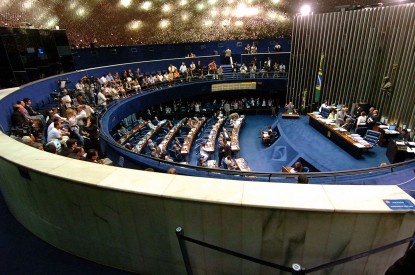
Chile’s Senate has approved the project aimed at regulating online betting platforms. The bill received 27 votes in favour, three against, and five abstentions.
Finance Minister Mario Marcel explained during the session that “this project seeks to regulate an activity that has seen substantial expansion outside the law since the first version of the project was submitted to Congress in March 2022, visible to everyone, without paying taxes and without complying with regulations. It is an activity and a market that require a regulatory framework to control and prevent excesses.”
He added that “it is important to consider the relationship between this initiative and the definition of illegal gambling contained in the Economic Intelligence project against organized crime, which updates the definition of illegal gambling and assumes that this online betting initiative will be approved beforehand, so that coherence can be established between both.”
Deputy Finance Secretary Heidi Berner said that one of the reasons for legislating this activity is that “despite violating the current legal framework, there are no effective tools to pursue illegal gambling through digital means. There is also a lack of traceability regarding the owners of the platforms and the origin of the funds, which poses risks related to money laundering and financing other illegal activities.” Berner emphasized the aim to formalize these platforms as registered companies in the country, under the proper oversight of the Superintendency of Gaming Casinos, which, according to the project, will transform into the Superintendency of Casinos, Bets, and Games of Chance.
She also highlighted that “the project establishes a regulatory design that balances incentives for compliance with severe penalties for those who remain illegal . . . Therefore, it represents a significant improvement compared to the current situation, where hundreds of platforms operate without user protection standards, without paying taxes, and without oversight.”
In response to some legislators’ concerns, she explained that the goal is to create a channelisation rate of around 90%.
The initiative will continue its detailed analysis in the Joint Committees of Economy and Finance to expedite processing, with a deadline for amendments set for 12:00 PM on September 29. The law will come into effect on the first day of the month following its publication, enabling immediate action against illegal gambling.
The licensing regulations will take effect six months after they are released. A temporary licensing process is available for applicants who haven’t operated illegally in Chile for the last 12 months and can prove compliance with technical standards similar to Chilean laws. Platforms that have been operating illegally must wait 12 months after ceasing those operations before applying for licenses. When they do, they will be required to pay a one-time substitute tax consisting of 31% of gross income and 0.07 UTM (Unidad Tributaria Mensual, a monetary measure used in Chile for tax calculations) per user account, based on market activity in the 36 months prior to the law’s implementation.