Further advertising restrictions in Brazil will expose bettors to illegal market says IBJR
The Brazilian Institute of Responsible Gaming (IBJR) has raised significant concerns regarding The Sports Commission in the Senate’s approval of Bill No. 2,985, which introduces stringent restrictions on the advertising of legalized betting establishments. This legislation could inadvertently expand the informal market according to the IBJR by weakening the communication channels between licensed betting firms and their customers. In addition, according to the IBJR, the bill jeopardizes the viability of a regulated industry dedicated to promoting responsible gaming.
“These restrictions further expose bettors to the illegal market, which already accounts for about half of the market, offering no guarantees, lacking control, and providing no return to society.
“Legal advertising guides, informs, and protects. With it, citizens can identify regulated platforms that adhere to strict regulations and commit to responsible gaming practices,” the IBJR said in a statement.
The IBJR argued that the new law was also unnecessary as “Brazil already possesses a robust regulatory framework that is constantly improving.” According to the IBJR “Law 14,790/23, Ordinance No. 1,231/24 from SPA, and Annex X of the CONAR (National Council for Advertising Self-Regulation) Code, developed with the active contribution of the IBJR, establish clear criteria for sector communication, focusing on ethics and the protection of vulnerable audiences.”
The IBJR finished by saying that it remains committed to dialogue, responsible gaming, and the development of an ethical and responsible market for all Brazilians.
According to the Brazilian Senate News Agency the following restrictions will be established regarding betting advertising in Brazil by the new bill should it be approved by the plenary: advertising during live sports events is prohibited; dynamic odds or real-time probabilities can only be displayed on the licensed operators’ own websites, apps, or platforms; printed advertising is not allowed; content promotion outside permitted hours is prohibited, even if it originates from official channels of betting operators.
Advertisements cannot utilize the images or involvement of athletes, former athletes, artists, communicators, influencers, authorities, or members of professional technical committees, although former athletes may advertise bets five years after retiring from their careers.
Direct or indirect sponsorship of referees and other members of sports competition arbitration teams by fixed-odds betting operators is also banned. Additionally, advertisements must not present betting as socially appealing, a means to personal success, alternative to employment, solution to financial problems, additional income source, investment opportunity, or promise of financial return.
The use of animations, drawings, mascots, characters, or audiovisual resources aimed directly or subliminally at children is prohibited, as is promoting programs that teach or encourage betting practices. Communication methods, such as messages or notifications, cannot be sent without the prior consent of the recipient, and advertising that is sexist, misogynistic, or discriminatory is not allowed.
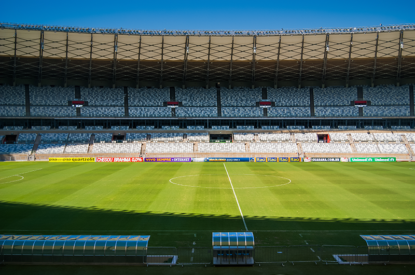
According to the bill static or electronic advertising in arenas, stadiums, and sports venues is prohibited, except for operators with naming rights to the venue or who sponsor the teams’ uniforms. In practice, this provision limits the broadcasting of sports betting advertisements to companies that have obtained naming rights for stadiums or championships, or that sponsor team uniforms during games.
However certain advertising practices are permitted under the new regulations. Betting advertisements can be aired on open and subscription television, streaming services, social media, and the internet between 7:30 PM and midnight. Radio advertisements are allowed during two specific time slots: from 9 AM to 11 AM and from 5 PM to 7:30 PM. Betting ads can be displayed during live event broadcasts in the 15 minutes before the event starts and the 15 minutes after it ends.
Advertising is also permitted at any time on websites, pages, or applications owned by operators, provided user access is voluntary. Meanwhile the branding of sponsors and betting operators can be displayed in promotional announcements for sports event broadcasts aired between 9 PM and 6 AM, as long as these ads do not contain invitations or promises related to betting gains, references to odds or promotional bonuses, or violate content classification guidelines. At the same time betting advertisements on social media and other internet applications are allowed for registered users who are verified to be over 18 years old.