Senate Committee approves excise tax on online betting in Brazil
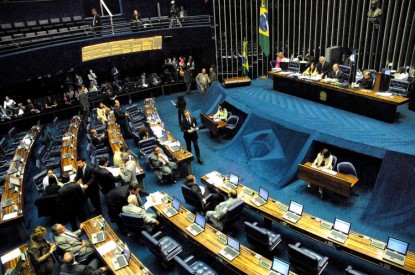
The Constitution and Justice Committee (CCJ) of the Senate approved PL 5582 of 2025 which would put in place a 15% Contribution for Intervention in the Economic Domain (CIDE) tax on bettor deposits in Brazil.
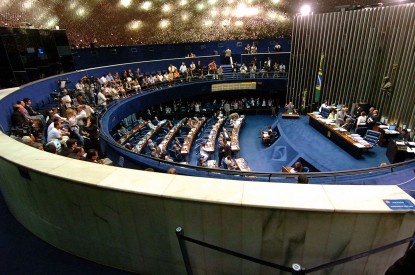
The Constitution and Justice Committee (CCJ) of the Senate approved PL 5582 of 2025 which would put in place a 15% Contribution for Intervention in the Economic Domain (CIDE) tax on bettor deposits in Brazil.
The bill also known as the “Anti-Faction Bill” seeks to create a criminal offense for criminal factions. The bill is being processed under an urgency procedure and must still be considered by the full Senate before returning to the Chamber of Deputies.
Senator Alessandro Vieira, who is the rapporteur for the bill in the Senate, incorporated several demands from the government of President Luiz Inácio Lula da Silva. Among the main changes are the classification of criminal factions, which can lead to prison sentences ranging from 15 to 30 years. In addition, Vieira introduced security measures aimed at strengthening the fight against crime. In the Chamber of Deputies, the Anti-Faction Bill was approved on November 18th, with a vote of 370 in favour and 110 against.
Vieira stipulated the creation of a specific fund dedicated to combating organized crime. This fund will be separate from the National Public Security Fund and will be financed by the creation of a 15% Contribution for Intervention in the Economic Domain (CIDE) tax on bettor deposits. It is expected that the resources generated will reach over R$ 30 billion annually, according to projections from the Central Bank.
The opinion presented by Senator Vieira received praise from the Minister of Justice and Public Security, Ricardo Lewandowski, who described it as “highly satisfactory.”
As it has been modified, the initiative will return for a new vote in the Chamber. In the other legislative house, the rapporteur for the text will be Deputy Guilherme Derrite who was responsible for the version of the report that had already been approved by the Chamber in November.