 ES
ES
 IT
IT
 PT
PT
 DE
DE
 NL
NL


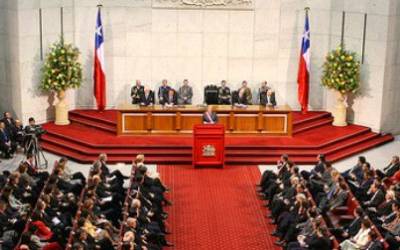
Chile’s Senate Economy Commission has proposed a series of measures to be incorporated into legislation regulating online betting, including a licensing system limited to operators legally incorporated in Chile with known offices and registered addresses.
Senators Gastón Saavedra, Matías Walker and Ricardo Celis also called for greater transparency over the ultimate owners and beneficiaries of betting operators. The proposals were discussed as part of a technical working group established with the government to advance an agreed text.
The senators said Chile needed an online betting market that was “regulated, transparent, safe and that pays taxes in the country”, according to the Senate.
They proposed a specific tax on online betting in addition to VAT, with revenues directed towards community sport, gambling harm prevention and treatment programmes, and the Common Municipal Fund.
The proposals also included identity verification or biometric controls to prevent minors from betting, a National Responsible Betting Policy, restrictions on payment methods and promotional incentives, and a prohibition on betting by athletes, coaches, referees and officials connected to sporting events.
The senators further called for stronger powers for the Superintendence of Casinos, Financial Market Commission, Internal Revenue Service and Financial Analysis Unit to pursue illegal operators, including through technological blocking and financial tracing.
The bill, originally introduced under former president Sebastián Piñera, seeks to establish a regulated online betting market while addressing illegal gambling, player protection, advertising, responsible gambling and financial transparency.
Its existing framework provides for an annual licence fee of 1,000 UTM, a 20% specific tax on gross income alongside income tax and VAT, and a 2% contribution from gross revenue to sport.
The bill has now been under consideration for more than four years, having been introduced in March 2022. After spending almost two years in the Chamber of Deputies, it entered the Senate in late 2023 and has since faced a prolonged committee process.
Despite hopes expressed in 2025 that it could be passed during the current presidential and parliamentary term, the Senate was still refining its provisions in September 2026, with no passage date announced.