ES
 IT
 PT
 DE
 NL


EveryMatrix has made little secret of its growth ambitions. Having expanded rapidly across products, markets and customers, the company is now looking towards another target: establishing itself among the top three global B2B gaming suppliers.
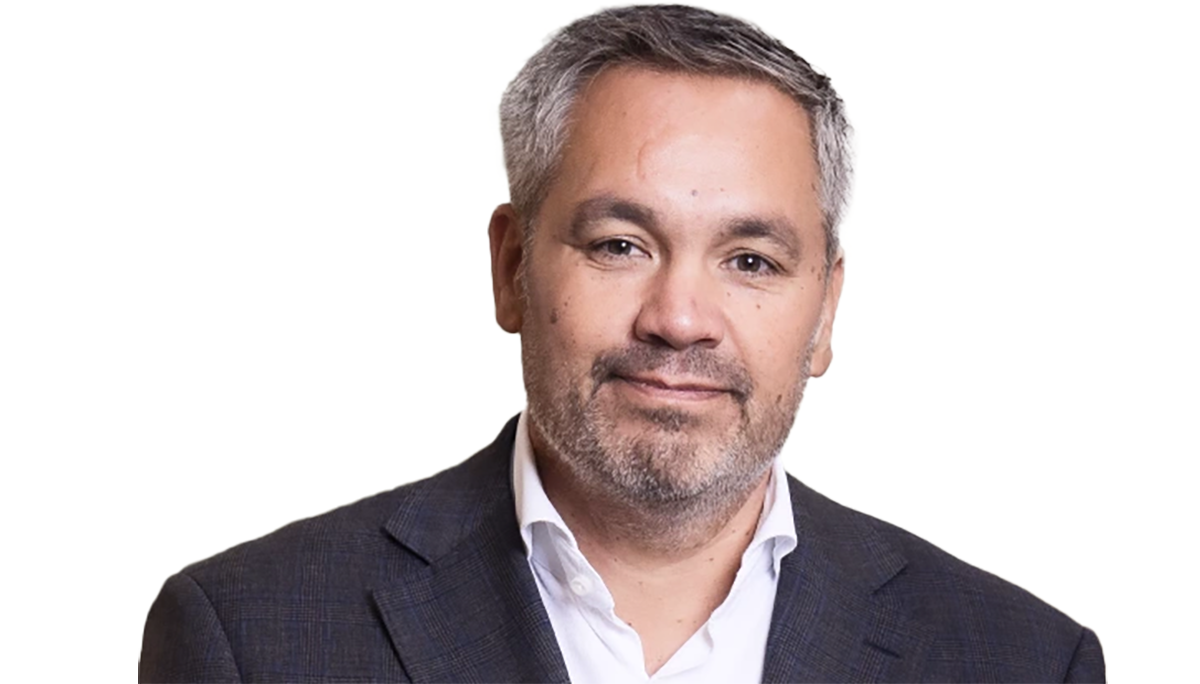
Speaking to Co-CEO, Jonas Groes, he believes EveryMatrix has a clear ambition of climbing up that ladder. Exactly what that ladder looks like is not straightforward. Unlike the professional services sector from which Groes joined EveryMatrix, gaming technology remains fragmented, with suppliers holding considerable positions in individual markets while others compete across multiple regions. “There are some very big actors in some markets who are only active in those specific markets, and then others who have a more global reach,” explains Groes.
EveryMatrix’s response is not simply to chase every available territory. It is looking at where it already has relationships, understands the market and sees an opportunity for its technology. “If we have a cooperation partner within that country, it’s a huge benefit for us. We understand the market much better. They vouch for us in some ways, and we become much more attractive to that market if we already have feet on the ground.”
But Groes’ focus extends beyond where EveryMatrix grows. Increasingly, it is about how a company that has expanded at considerable speed creates the structure required for its next phase.
Scaling the structure
When Groes spoke to G3 in May this year, he described EveryMatrix’s challenge as moving beyond growth for growth’s sake towards scaling properly. Several months into his role as Co-CEO, that process is becoming more visible internally. “We are very much focused on trying to structure our work a little bit more,” he says.
Integration processes are one example. EveryMatrix is adopting more of a portfolio approach, creating clearer steps around integrations and establishing greater visibility across projects. “One of the things that I have focused a lot on is gaining that transparency and overview so that we all know: this is where we are and these are the issues we are facing with these processes.” The underlying resources are already there, Groes believes. The task is to organise them more effectively while recognising that the processes themselves cannot remain static.
“We have the raw material, but it’s also clear now with AI coming that it’s not a static process. We can’t just build the swim lanes and then they will be there forever. It’s a developing process.”
The greater structure is being built around EveryMatrix’s 2030 strategy. Rather than leaving the strategy as a company-wide ambition, EveryMatrix is breaking it down across new sales, account growth, operational excellence and M&A, before translating those objectives into annual targets for individual business units and functions. “We want to have that responsibility and accountability where we can actually say, ‘We have built this thing in this part of EveryMatrix and it’s an important ingredient in order to reach the targets that we have set in our strategy.'”
The overall direction towards 2030 will remain, but the numbers are expected to move with the performance of the business. “If we’re super successful in 2027, I think we’ll have higher targets for 2028.”
From fast to trusted
Groes describes another part of that transition as moving from being one of the industry’s fastest-growing providers towards becoming a “trusted, must-have tier-one provider”. For him, growth and trust are not competing objectives. “If you succeed in becoming the trusted cooperation partner, you also fuel your growth.” The difference is the time required to establish that position.
“In the end, it also comes down to revenue. The revenue will not stay if people don’t trust you and if you don’t build that trust. But building trust is a much more cumbersome process than having the short sale. You need to be able to deliver again and again and again in order to build that trust and keep it.”
It’s a point that’s especially important as EveryMatrix works with more lotteries and tier-one organisations, but Groes sees the same principle applying as it enters new markets. EveryMatrix must understand the territory, the companies operating within it and the requirements that should influence its product. “We target markets and say, ‘This is where we see our next growth adventure.’ We want to be that trusted cooperation partner. In order to be there, we need to understand that market, understand the companies in that market and align our product towards the requirements that are relevant.”
Changing the operator relationship
The traditional relationship between technology supplier and operator is moving towards something more consultative, with EveryMatrix using the data generated across its technology and markets to participate in discussions about where customers can grow. “That’s the clear ambition – that we become much more of a partner, a consultative partner, where we discuss the opportunities that we see and that they see.” And it’s data that’s central to that relationship.
“We have vast amounts of data on the client and on the market that they are operating in, which again has a feedback loop into our products. We can take those discussions around what would be most relevant towards their growth journey.” For EveryMatrix, this creates a connection between account growth, new market entry and the products it develops. Greater knowledge of a customer can influence the technology, while that technology can provide further information about where opportunities exist.
Organic growth meets M&A
M&A sits alongside that organic growth rather than representing a separate strategy. “It goes hand in glove,” says Groes. New sales teams identify markets where EveryMatrix sees an opportunity and where it may need people on the ground. Account teams focus on expanding strategic customers. Together they provide the organic component of the company’s growth plan. Acquisitions can then add another route towards the targets established for 2030, and importantly it was FSB that has demonstrated what that can look like. One of the principal objectives behind EveryMatrix’s acquisition of the sportsbook technology provider was establishing a stronger footprint in the UK and Ireland. This presence has subsequently created opportunities beyond the original rationale for the transaction.
“One of the major ideas with the acquisition was, of course, to have a footprint in the UK and Irish market. Now we have that and it’s growing, thankfully. That’s something we want to do more of.” The deal also brought people into EveryMatrix alongside technology and customers. “We’re also lucky that there were some really talented people in the organisation.”
Making efficiency a competitive advantage
Any discussion about scaling a technology company in 2026 inevitably reaches AI. EveryMatrix’s position has been to talk about AI primarily as a technology that enhances its people rather than replaces them. Groes, however, acknowledges that the distinction may become less clear as the technology develops. “If we look at the development piece, agentic AI – it’s mind-baffling what we can do.”
EveryMatrix continues to grow, giving it scope to use AI to increase productivity without framing its implementation purely around reducing headcount. But Groes recognises that greater efficiency will inevitably alter the skills and roles required by the company.
“We are becoming much more efficient. Of course it is enhancing, but which of the profiles is it enhancing? And are there some that it’s replacing?”
He sees two potential sources of competitive advantage. The first is internal: using AI to structure work more effectively and increase the speed and efficiency of the organisation. “Whoever is most efficient will have a competitive advantage towards the market.”
The second is what that increased capability allows EveryMatrix to deliver to operators. “It’s about what you can create towards your cooperation partners. How can you go to market? AI also plays a fairly big role in how fast you can get there and with which products.”
Proof of the strategy
Groes joined the Co-CEO role with EveryMatrix already growing quickly. His task is not to replace that momentum with process, but to put structures around the business that allow it to pursue a larger target. The 2030 strategy gives EveryMatrix its destination.
Over the next 12 months, Groes wants evidence that the model being built to reach it is working. “We have set some really clear goals in our 2030 strategy,” he says. “I would really like us in one year to be on our way towards 2030 and that we’re using the model, that we can see the benefits and that we are closing those deals within those markets that we are focusing on. For me, that would be proof that our strategy is correct.”