EveryMatrix: striving for perfection in every vertical
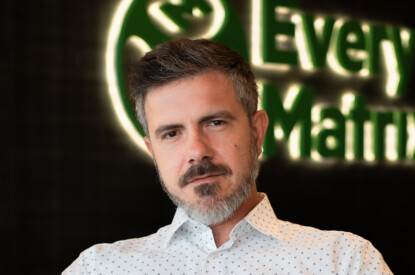
Following a company restructure that enables a more flexible, consultative sales approach across the entire product portfolio, Ivan Rozic, Global Commercial Director at EveryMatrix, discusses fostering stronger client relationships and cross-functional collaboration.
Congratulations on the new role. Could you tell us more about your expanded remit and where you sit within the leadership structure?
Thank you. I’ve been with EveryMatrix for just over four years. I initially joined the sportsbook division, OddsMatrix, back when we were separated into business units. At that time, we were targeting operators for the product we oversaw but now, with the new restructure and leadership reshuffle, we have a line across the central group level.
Ultimately, this means the scope of products is there for pretty much anything and everything EveryMatrix has to offer, which offers a lot more flexibility when you’re talking to operators. When you begin a conversation, you don’t know what an operator’s pain points are.
Once you get to know their business, players, markets and issues they’re facing, with the new structure it’s much easier to switch from topic to topic. Instead of sticking rigidly to selling one product you offer things that will bring added value.
With a global sales team, what are the challenges of maintaining a cohesive structure and communication?
Added to that challenge is that many of us remote work. Because of the set-up we have and our wide portfolio of products the collaboration between salespeople needs to be second to none. The people that we have aren’t as cut-throat as you see in other sales departments as we approach projects with a consultative approach.
As a sales team we partner up on projects and help each other out which brings more value. If you’re talking to an operator about casino and have a colleague more experienced in that area, you bring them into the conversation.
Our purpose isn’t to shove a product down people’s throats. We’re proud of the fact that we haven’t had any big clients churn from us for almost a decade which means we’re choosing the right partners. Typically, there’s a lot of focus on operators choosing the right provider, but providers are beginning to realise that if they choose the right partners they can grow at the levels we are.
What’s driving the profit margins exceeding fifty per cent? How does EveryMatrix strike the balance between reinvestment in innovation with strong EBITDA margins?
I think it’s down to strong leadership and management bringing that responsibility down to business level. Most other organisations, particularly in iGaming, are pretty centralised. Different verticals may have different names, but decisions are made on top meaning there’s not a lot of PNL responsibility below. What our management have done well is to ensure that PNL responsibility isn’t only at board level. We have a few floodgates before you can open the purse strings and splash money.
We’ve been reinvesting in innovation, development and acquisition, but have taken our time in doing so. Some projects haven’t panned out as we’d wanted them to, but the major ones have been a success. Management hasn’t pulled the trigger too fast nor are they afraid to cut projects which aren’t hitting revenue targets.
There have been a few projects that I’ve seen funded, given extensive time to ascertain performance, then cut. Projects don’t have emotional attachments so if there’s no return on investment, we turn our hands to something new.
What role do proprietary technologies play in differentiating EveryMatrix from the competition?
If you take the average industry benchmark, sportsbook providers tend to be very good on sports, but they aren’t advanced on platform and casino products. Even a company as huge as Sportradar has been trying casino for the better part of four years and it’s not there.
On the platform side they’ve been making some acquisitions, but you can hardly name them a go-to. Getting out of a niche within the industry isn’t easy. You’ve seen the likes of EGT and Pragmatic invest heavily into their turnkey products – and for some of them it’s picking up – but it’s not an easy feat to cover all areas. That’s unique to EveryMatrix.
We’ve got a diversified team across the globe in offices spanning from the Philippines to the States and if you look at the average benchmark across our products, we might not be the best on all of them but it’s difficult to find a company that brings the level of quality we do across the board. We want to keep improving our products and achieve the impossible dream of being the best in every vertical.
What’s the company’s biggest challenge in maintaining that competitive edge?
Something that can hurt providers is a growing awareness of player needs through our partners. Clients are increasingly overloading us with feedback on what we should do to progress and that could harm innovation because players don’t always know what they want. I doubt crash games, cash out or bet builder were made by players.
These innovations came from great ideas being implemented successfully. So far, I think we have found a good balancing act. We have a bet simulator product that wasn’t requested by our partners, but they’ve been blown away since we presented it to them, which has subsequently opened other doors.
If you don’t have an innovative approach, you put yourself in a position where you are always catching up with the market. The bigger you grow, the bigger your clients and the bigger the pressure to deliver on what they think is important for the business, but you always need to keep that R&D approach and coming up with fresh ideas.
How do you approach potential new clients?
It isn’t a big industry. I’ve worked in industries where there are thousands of possible clients and it’s a numbers game. In iGaming, you don’t have a lot of options, particularly when it comes to tier one operators. For every single regulated market there are two to ten companies that are a desirable client profile. The most valuable factor you can have in sales is the reputation of the business you represent and the personal connections you have.
We always conduct exploratory conversations to identify where their pain points might be. The potential client might be satisfied with their existing provider but there isn’t a business out there which is happy with all their processes and products.
What brings us a lot of value in talks is that we go across the board. If they have a proprietary sportsbook product that they’re happy with and is on an upward trajectory, that’s not the end of the story. We can then discuss the platform, casino, payments, affiliate tools, live casino, etc.
We’re also trying to break out our sportsbook so it’s not a take-all or nothing. Not all operators need an entire sportsbook, but they might be interested in a couple of things to improve their existing solution such as a feed solution or bet simulator product. As a sales team we’re always trying to see if we can be a good fit. This can mean the sales cycle is a bit longer, especially for bigger operators where any change is sensitive.
For example, with a recent state lottery the whole process took 15 months with two RFI and RFP rounds, as well as dozens of questions. When you get selected out of 28 companies after the RFP phase (likely double that number in the RFI phase) and you come out on top it really brings satisfaction to what you do.
How does the sales approach differ between markets?
We have a regional approach which is something we didn’t have back when EveryMatrix was siloed into different business units. We’ve learnt our lesson in the value and importance of having specialists across the world.
Being educated in a market makes local operators more likely to want to speak to you. This is why we’re currently building out a team in Latin America. You can read all you want about what’s going on in Brazil, Chile and Peru, but if you aren’t in the market you’re too far away to understand.
How are you integrating the sales teams of FSB into this structure?
We acquired FSB because we like the people and the technology, but we weren’t satisfied with the end-product. We didn’t want to maintain a different tech stack and live with it for years to come. Legacy will always bite you in the ass one day.
We’re building on the knowledge within FSB because all products you ever see are based on people’s experience. It isn’t easy to integrate people culturally, yet alone the technology side of things, so it’s a long process but one I feel we’ve been doing quickly in the right manner.