ES
 IT
 PT
 DE
 NL


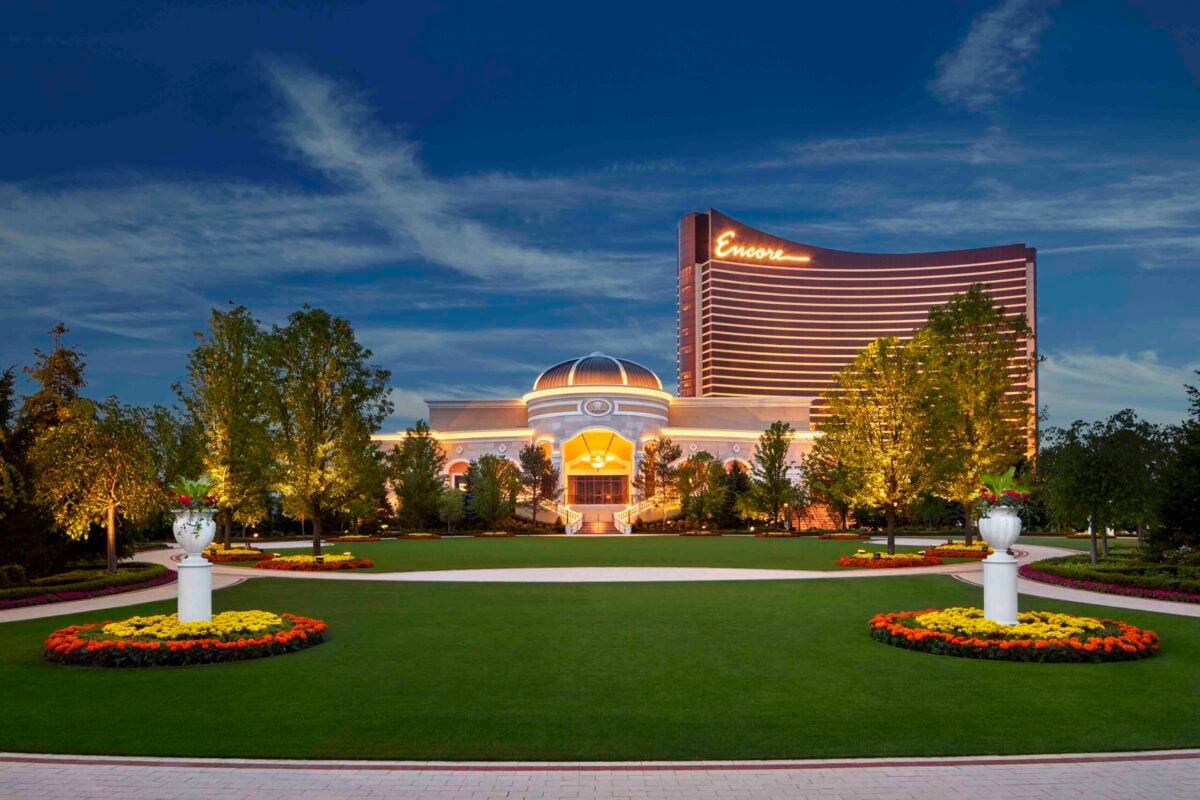
Historical horse racing machines will change the dynamics of the limited market
Craig Billings, CEO of Wynn Resorts, has warned the Massachusetts government that if it continues to expand gaming, it risks destroying the private investment made in bringing destination resort casinos to the state.
In an opinion piece written for the Boston Globe, Billings said that the introduction of sports betting, online lottery games, the consideration of online gaming and the passing of a new bill allowing historic horse racing will threaten the jobs, state tax revenue, municipal payments, and long-term economic development brought by the state’s three destination casinos.
Wynn invested $2.6bn in Encore Boston Harbor in 2019 and has generated more than $1.1bn in state tax revenue, paid $1.3bn in employee compensation, made $370m in community payments, donated $15m to local nonprofits, and supported thousands of jobs. It is one of three casinos in Massachusetts along with Plainridge Park Casino, owned by Penn Entertainment, and MGM Springfield, operated by MGM Resorts. There is also a slot parlour operated by the Mashpee Wampanoag Tribe.
Billings said: “This was not an unlimited gaming market. It was a limited-license model built around major capital investment and serious public obligations. Economics mattered then, and it matters now.”
Of the amendment allowing horse racing licensees to develop slot parlours using historic horse racing machines, he said: “These are effectively slot machines operating under a different regulatory label. They compete for the same customers and discretionary spending without the licensing costs, tax obligations, community commitments, capital investment, responsible gaming controls, or regulatory oversight required of destination resort casinos.”
“Each decision expands gaming without fully accounting for its cumulative effect on the operators expected to sustain the original model,” Billings warned. “The lottery’s new “eInstant” games function, in every way that matters to a player, like slot machines. The state that regulates destination resort casinos and taxes them is now the casinos’ competitor, while continuing to expect the same revenue performance and escalating payments to host and surrounding communities.”
“As technology has introduced new gaming platforms, Massachusetts policymakers have embraced them while largely ignoring their impacts on existing employees, employers, and future investments.”
In August, the state’s three casinos brought in GGR of $101.9m.
Billings also warned that new gaming opportunities in New Hampshire would also take gaming spend demand directly out of Massachusetts. He highlighted that over the past four years, labour costs at Encore have gone up by 37 per cent while revenue has grown less than two per cent.
“That math cannot be ignored,” Billings said. “No business can absorb that imbalance indefinitely, particularly when state policy is simultaneously putting additional pressure on the revenue base.
“Every new form of gaming competing for the same fixed pool of demand puts pressure somewhere — on tax projections, host community payments, future investment, or ultimately what is available for the people on the floor. Lawmakers who support that expansion don’t bear those consequences. Operators, shareholders, communities, and employees do.”
The full opinion piece is available at The Boston Globe.