ES
 IT
 PT
 DE
 NL


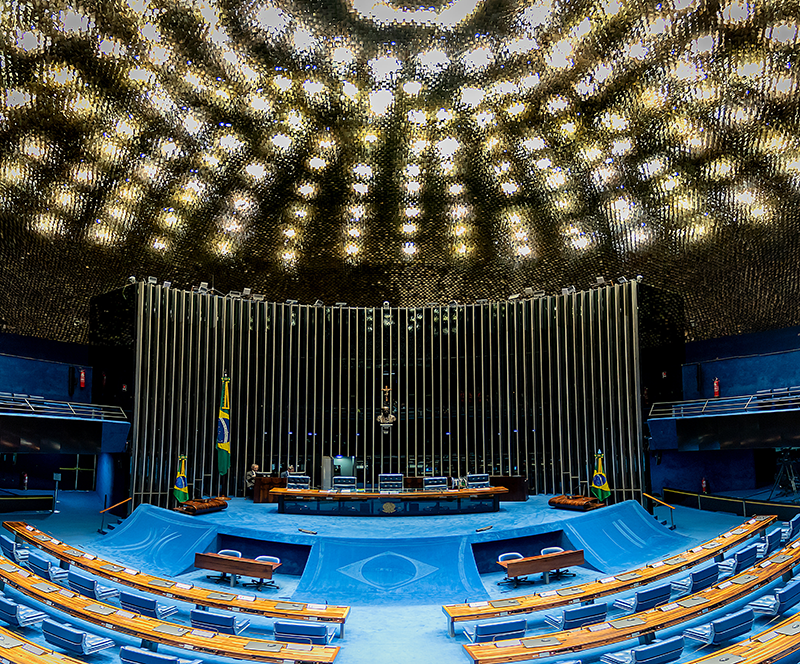
Brazilian lawmakers submitted 99 amendments to the provisional measure banning fixed-odds betting, proposing alternatives ranging from restoring the regulated market to allowing sports betting while keeping online casino games prohibited.
The amendments were filed before the 13 October deadline for changes to Provisional Measure 1,394/2026. Five were subsequently withdrawn—amendments 12, 18, 19, 20 and 55—leaving 94 active proposals for consideration.
The joint committee appointed to examine the measure has not yet been installed or begun considering the amendments. Provisional Measure 1,394 remains in force and is scheduled to enter the urgency regime on 9 November, with its initial congressional consideration period ending on 23 November.
However, several lawmakers have proposed replacing the blanket prohibition with more limited restrictions.
Senator Astronauta Marcos Pontes of the Liberal Party submitted Amendment 15, which would prohibit online casino games while preserving fixed-odds betting on real sporting events.
The amendment would also preserve state and federal sports betting authorisations and introduce tighter advertising rules. In its justification, Pontes acknowledged the social effects of gambling but argued that regulation could distinguish sports betting from online casino products.
Senator Dr Hiran of the Progressive Party made a similar proposal through Amendment 38. It would prohibit online games and betting on anything other than real sporting events while permitting authorised operators to display their brands through team and athlete sponsorships.
The amendment seeks to reconcile action against family indebtedness with “the preservation of a lawful economic activity” already regulated by Congress. It says sports organisations should be allowed to maintain essential sponsorship revenue through branding on uniforms.
Other amendments would restore both sports betting and regulated online gaming.
Amendment 28, submitted by Deputy Julio Arcoverde, would apply the prohibition only to operators without valid authorisation. It argues that banning online games in the regulated market would not eliminate demand but instead transfer it to environments without age verification, self-exclusion, spending limits or technical certification.
“Prohibiting them in the authorised market does not eliminate demand: it transfers it to environments without age verification,” the amendment states.
Deputy Mauricio Neves meanwhile submitted four amendments, including Amendment 64, a substitute text that would restore the authorised market while imposing stricter requirements covering advertising, responsible product design, player protection and enforcement against illegal operators.
Neves argued that the provisional measure “interrupts, within an extremely short period, a market that was legalised, regulated and subjected to authorisation, supervision and taxation by the state”. His proposal would restore existing authorisations and introduce centralised responsible-gambling controls, including shared self-exclusion and deposit, loss and playing-time limits.
Separate amendments address the social consequences of betting. Amendment 68, submitted by Deputy Ana Paula Lima of the Workers’ Party, would establish treatment guidelines within Brazil’s public health system for people experiencing gambling disorder and their families.
Amendment 99, submitted by Senator Carlos Portinho, proposes compensating for sports funding lost under the betting ban by increasing the share of federal lottery proceeds allocated to sport. Portinho warned that the Olympic and Paralympic sector could lose approximately BRL2.6 billion by 2027 and proposed redirecting an estimated BRL324 million a year from lottery prize allocations.
Under the normal legislative process, a joint committee must examine the measure and its amendments before submitting a recommendation to the Chamber of Deputies and Senate.
Published on 25 September, Provisional Measure 1,394 prohibits the operation, offering, intermediation and advertising of fixed-odds betting in Brazil, covering both sports betting and online games. It also provides for the termination of existing authorisations and the blocking of platforms and related financial transactions.