ES
 IT
 PT
 DE
 NL


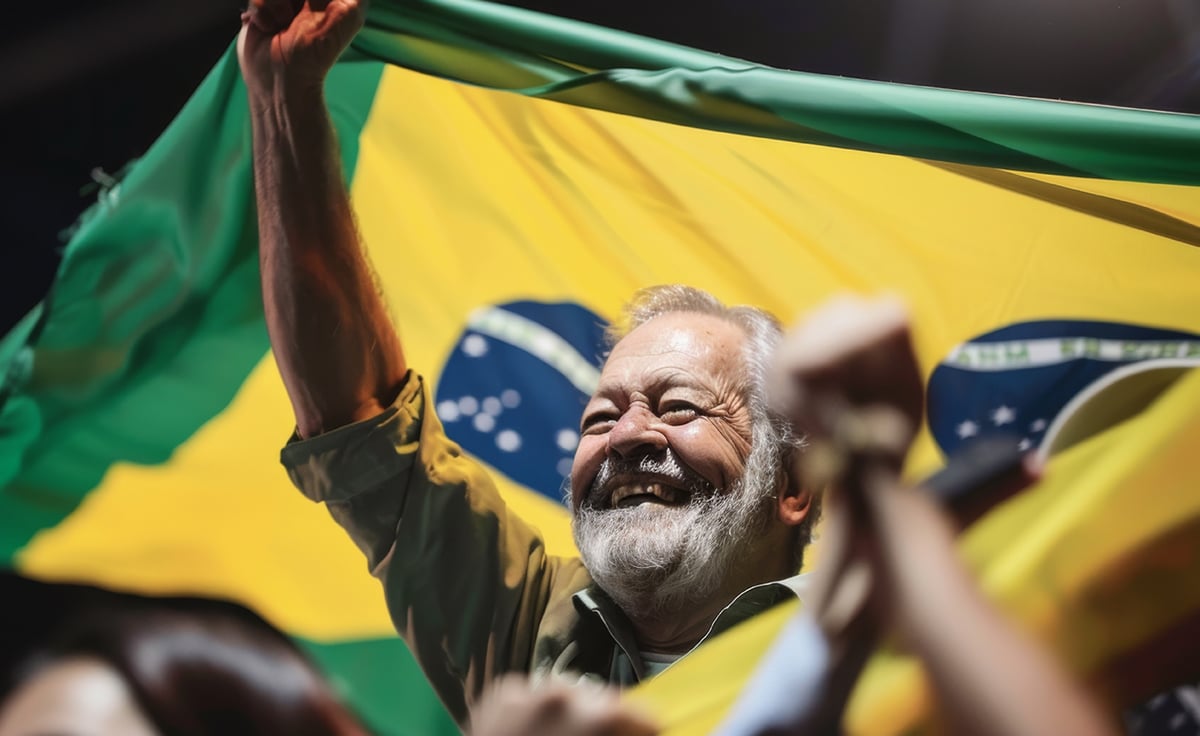
President Luiz Inácio Lula da Silva has presented Brazil’s prohibition of fixed-odds betting as a defence of families and Christian values as he attempts to reduce Flávio Bolsonaro’s advantage among evangelical voters before the 25 October presidential run-off.
In a letter to Brazilian evangelical families published on 14 October, Lula placed action against online betting alongside proposals covering working hours, public security, household incomes and healthcare. He described these as practical government measures intended to protect families.
Although Lula acknowledged that he is not an evangelical, he emphasised his respect for different religions and said he shared evangelical Christians’ commitment to family life.
The president also used explicitly religious language when discussing his political career. He attributed his survival through previous personal and political struggles to divine protection and described his pursuit of another presidential term as part of a continuing sense of purpose.
Against that background, Lula identified the campaign against online betting as one of the government actions that “bless” evangelical families. He said bets were “destroying so many homes”, framing the prohibition as a response to the effects of gambling on household finances and family stability.
“Among the various actions of my government that bless your families, I remind you, for example, of the fight against online betting,” he wrote. The letter presented the crackdown not primarily as an industry or regulatory measure, but as an intervention intended to prevent further harm to Brazilian households.
The betting measure was mentioned alongside Lula’s support for ending Brazil’s six-day working week and guaranteeing workers two days of rest. He argued that “life is not just about work” and associated shorter working hours with more time for families, rest and participation in church life.
This allowed Lula to place two different policies within the same family-focused argument. The betting prohibition was presented as protecting households from financial and social harm, while reform of the working week was portrayed as giving people more time with their families and religious communities.
The letter ended with an explicit electoral appeal. Lula asked evangelical families to pray for “discernment” before voting and urged them to approach the ballot box with a free conscience.
The intervention comes at a critical stage of Lula’s re-election campaign. Flávio Bolsonaro led the first round on 4 October with 47.03% of valid votes, compared with Lula’s 45.16%, sending the two candidates into the run-off scheduled for 25 October.
The gap is significantly larger among evangelical voters. Datafolha’s second-round polling placed Flávio Bolsonaro on 62% and Lula on 29% within the evangelical segment, although those subgroup figures carried a four-point margin of error.
Nationally, the same survey put Flávio Bolsonaro on 47% and Lula on 45% of total voting intentions, leaving them technically tied within its two-point overall margin of error. Excluding blank, null and undecided responses, the result was 51% for Flávio Bolsonaro and 49% for Lula.