 ES
ES
 IT
IT
 PT
PT
 DE
DE
 NL
NL


The battle over whether sports-event contracts are financial products or gambling wagers has intensified in the United States in recent weeks, with the US federal government and the Commodity Futures Trading Commission (CFTC) now pursuing a coordinated nationwide legal offensive against multiple states attempting to restrict prediction markets.
What began as isolated disputes involving Kalshi has evolved into regulatory clashes facing the wider US betting and financial trading sectors. The CFTC has now filed lawsuits against at least five states: Arizona, Connecticut, Illinois, New York and Wisconsin, arguing that state gambling regulators have no authority over federally regulated prediction market exchanges. The lawsuits centre on platforms including Kalshi, Polymarket, Coinbase, Robinhood and Crypto.com, all of which have either launched or facilitated sports-event trading markets that many state regulators argue are functionally indistinguishable from sports betting.
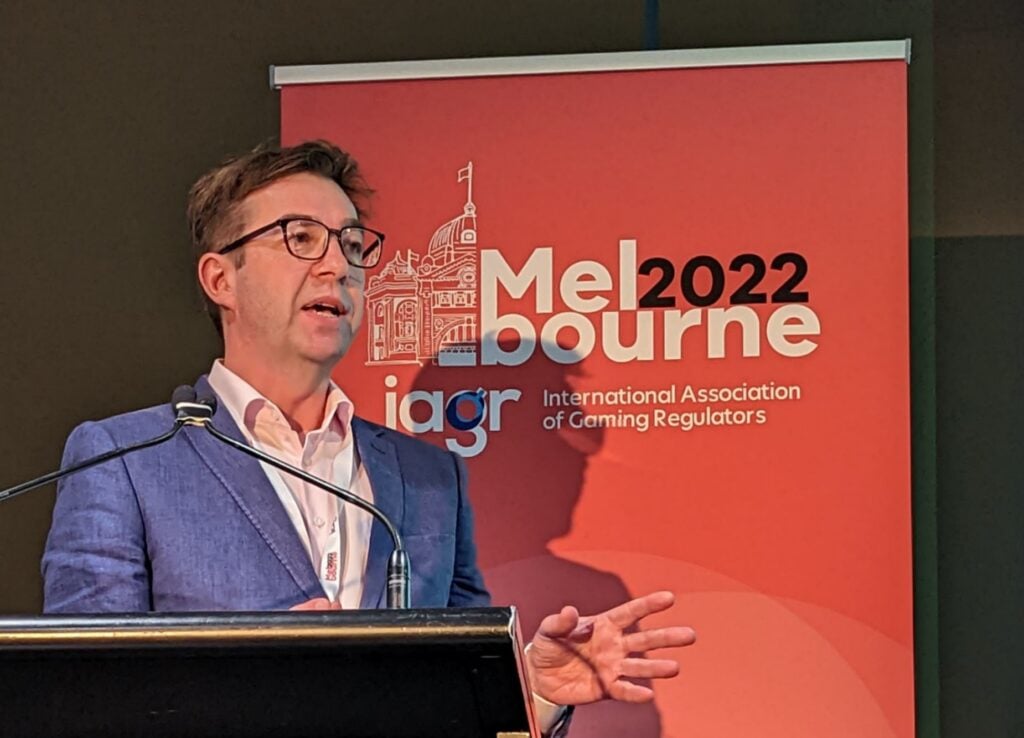
The federal government’s position is that event contracts traded on CFTC-regulated designated contract markets are derivatives or swaps governed exclusively by federal commodities law under the Commodity Exchange Act (CEA), not state gambling statutes. Speaking about the subject recently, CFTC Chair Michael Selig (pictured) made clear the agency intends to continue fighting states that challenge its jurisdiction. “We will keep suing states that try to regulate prediction markets,” Selig said, describing prediction markets and sports betting as “two separate things.”
The legal confrontation accelerated after New York Attorney General Letitia James sued Coinbase Financial Markets and Gemini Titan in April, alleging their event-based contracts constituted illegal gambling under state law and required New York gaming licences.
James argued that sports and election contracts are “quintessentially gambling” because outcomes are based on chance and lie outside participants’ control. The lawsuits also criticised the platforms for permitting users aged 18 to 20 despite New York’s minimum age of 21 for mobile sports betting.
Wisconsin followed with civil enforcement actions against Kalshi, Polymarket, Crypto.com, Robinhood and Coinbase, alleging illegal sports betting activity under state law. In response, the CFTC sued Wisconsin directly, seeking declaratory and injunctive relief to prevent the state from enforcing gambling statutes against federally regulated exchanges. However, the broader dispute now extends well beyond New York and Wisconsin.
Arizona, Connecticut and Illinois have all previously issued cease-and-desist orders or enforcement actions targeting prediction market operators. Arizona additionally pursued criminal charges against Kalshi executives, significantly escalating tensions between state gaming authorities and federal regulators. Meanwhile, several other jurisdictions including Nevada and New Jersey have expressed growing concern that sports-event contracts create a parallel nationwide betting market operating outside traditional sportsbook licensing, taxation and responsible gambling frameworks.
At the same time, opposition is expanding beyond state regulators. Professional sports unions representing players from the National Basketball Association, National Football League and Major League Baseball have urged the CFTC to ban certain player proposition-style event contracts, warning they could encourage harassment, manipulation and the misuse of medical or performance-related data.
Tribal gaming groups are also entering the fight. In Wisconsin, the Ho-Chunk Nation recently secured an early procedural victory allowing its lawsuit against Kalshi to proceed, arguing that sports-event contracts infringe upon tribal exclusivity rights under the Indian Gaming Regulatory Act.
Complicating matters further, federal authorities are increasingly examining insider trading and market manipulation risks within prediction markets, particularly around political and geopolitical events. Recent reports indicate the CFTC and federal prosecutors are investigating suspicious trading activity tied to government and military developments, while regulators have begun deploying AI-driven surveillance tools and blockchain analytics to monitor offshore platforms such as Polymarket.
The outcome of the legal battles could ultimately determine whether prediction markets in the United States are primarily regulated as financial instruments under federal commodities law or as gambling products controlled state-by-state. With conflicting court rulings beginning to emerge across jurisdictions, legal observers increasingly believe the issue could eventually reach the US Supreme Court.
CFTC escalates Prediction Market battle
The CFTC continues to expand its legal fight against US states attempting to regulate prediction markets as gambling, intensifying a nationwide clash involving regulators, sportsbooks, tribal operators and trading platforms.