 ES
 IT
 PT
 DE
 NL


High Roller Technologies is approaching the launch of ROLR with a decision that says much about how it intends to compete: rather than simply take an established third-party platform and get to market as quickly as possible, the company has opted to build around technology it can control.
In August, High Roller announced a Platform License and Development Services Agreement with DeepEther Labs, the Malta-based company behind mrkts.com and the Elantil iGaming platform. The deal gives High Roller ownership of the customer-facing ROLR application alongside extensive source-code licensing rights.
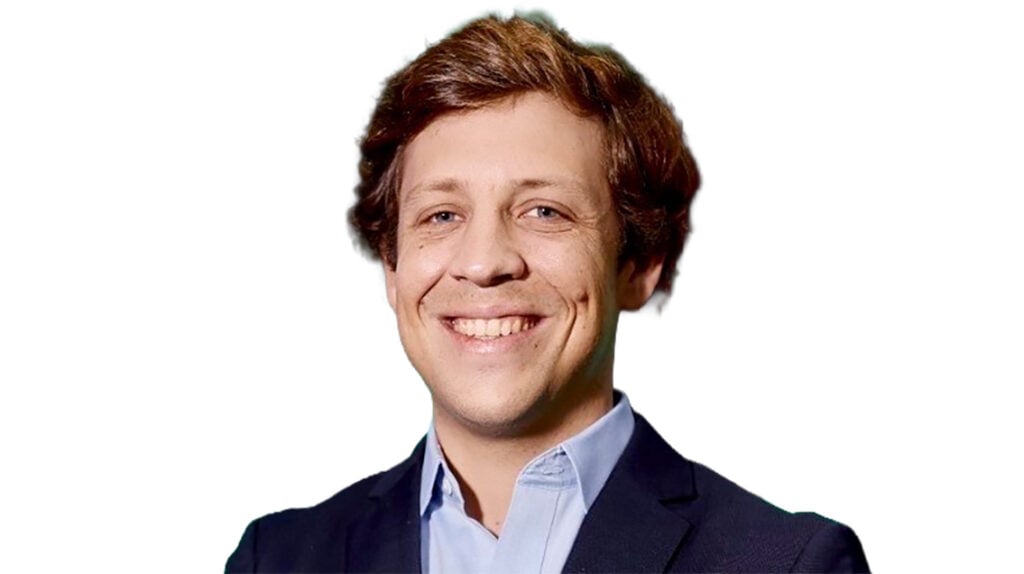
For CEO Seth Young, that control is intended to give the business greater freedom over how the product develops once it reaches the market. “Having the ability to innovate rapidly, introduce novel ideas on your own timeline and have a focus on the prediction market product – and only the prediction market product – is a huge advantage for us,” Young tells G3.
“We are a pure play in the US for the moment with a prediction market product. We’re not a vertically integrated iGaming company. We’re not a sports betting company. We’re not a sweepstakes company. We’re not a crypto exchange. We’re focused solely on this customer and this vertical.”
It’s this focus that has influenced High Roller’s decision to take greater ownership of its technology from the outset. “It’s really hard to migrate off something that is B2B and that you’ve built upon and become reliant upon over years once you’ve integrated everything into it. We had the opportunity to start from scratch, so we took it. The economics in the long term are better if we’re successful in the space. So why not start the right way?”
Trading speed for control
Young acknowledges that High Roller could potentially have reached the market sooner through a more conventional platform arrangement, but says the difference amounted to months rather than a fundamental delay. “Why would we want to have the same product as so many other people when we’re trying to differentiate ourselves?” he asks. “Sure, we wanted to get to market fast, but I think we were willing to compromise a few months of speed for that major long-term differentiation.”
The mrkts.com agreement also provides High Roller with technology rights extending beyond prediction markets into online casino and sports betting. Young is cautious about attaching those rights to a predetermined expansion strategy. ROLR and prediction markets remain the immediate focus, but the agreement gives the company options should its strategy evolve.
“With the same product, we also attach potential functionality in iGaming and sports betting,” he says. “That matters for us too in terms of the medium- and long-term implications. Who knows where we go with this? Right now, it is prediction market focused. Having this platform gives us those rights and that flexibility to go into the other spaces where we have our roots.”
As for where High Roller itself might be in another year or two, Young is reluctant to predict. “If you looked at this company last year, you wouldn’t have suggested we’d be getting into the prediction market space,” he says. “If you look at the company next year, who knows where we’ll be? The year after that, who knows? What I can say is we have a very strong, stable, sophisticated management team that really understands the market, and we will continue to do what makes sense for this business.”
Getting ROLR to market
High Roller remains on course for an October launch, according to Young, with testing already under way. “There are always going to be technical milestones to complete,” he says. “We started that process and it’s been a very intense period for our team, our testers and some of the folks we’ve invited to it. We’re on target for launch in October. We haven’t put out the specific date, but nothing’s changed.”
Central to the model is High Roller’s relationship with Crypto.com and Crypto.com | Derivatives North America. High Roller acts as the introducing broker, while the regulated market infrastructure sits with Crypto.com and CDNA. Young compares the consumer-facing relationship to the way a sportsbook can control its own customer proposition while taking underlying markets from a data and trading supplier.
“The customer comes in through our front,” he explains. “We can control what they see, what they don’t, when they see it and when they don’t.”
Working with an established participant in the sector has also allowed High Roller to enter a new market without pretending it already possesses every answer. “I think it would be a mistake to claim that we were the foremost experts in the space,” Young says. “We’re smart, we’ve got an amazing team and we know so much more now than we knew back in January. Working with a company like this allows us to get into the space and figure out what we don’t know – and do that really fast.”
Beyond the contract
The ability to decide which markets reach the customer is another area where Young believes operators can differentiate even when several businesses have access to similar underlying contracts. Simply providing thousands of markets does not necessarily create a better proposition.
“The differentiation is in how you retain your consumers, what your loyalty programmes look like – there are a lot of intangibles there,” he says. High Roller can choose which available markets to implement, how they are surfaced and how the customer discovers them. Product development around those markets will be another part of the proposition.
Young says High Roller has an applied AI team developing concepts for its emerging B2C offering, although he is not yet ready to disclose the products it is working on. “I have seen, played with and tested some of the coolest stuff I’ve ever seen,” he says. “It’s not all in the space, and I do think that’s an area where we will over-index.” “We need to get live and get to market. We do have a lot of fast-follow features that we’re working on. It’s a very exciting time for us on the product side.”
Looking beyond sports
Sport has been the most visible battleground as gaming operators move into prediction markets, but Young does not want High Roller simply following larger competitors into an acquisition fight centred entirely on sports customers. “There’s a lot of product out there now, and a lot of it is pretty much the same,” he says. “The time that we’re in now kind of reminds me of 2018 when sports betting was introduced in the US. Nobody’s product is great. There are some good ones and they’re getting better fast, but there’s nothing that’s great.”
Young expects ROLR to participate in sports, but High Roller is also looking at the much wider range of event contracts that prediction markets make possible. “We are not going to compete today with billions of dollars in ad spend focused towards sports,” he says. “It doesn’t mean we’re ignoring it. Some of our early deals are definitely focused towards that. But it does mean that we’re considering different ways to approach the market in the medium and long term.”
Unlike High Roller’s established casino business, which operates outside the US, ROLR is starting without an existing domestic casino customer base to migrate. “The breadth of markets is really interesting,” Young says. “You can engage with anything that’s event-based, more or less, and so it creates a really interesting, different set of consumer cohorts.”
‘Carefully’
One question hanging over every US prediction market business is regulation. The expansion of federally regulated event contracts has generated continuing debate over their relationship with state-regulated gambling, particularly sports betting. Asked how High Roller factors that uncertainty into its investment, Young’s immediate answer is simple: “Carefully.” He accepts there are credible arguments around the regulatory direction of the market and does not claim to know how those questions will ultimately be resolved.
“I can’t tell you what’s going to happen,” he says. “You can ask me the question today and a week from now I might have a different answer. You can make reasonable arguments on both sides. Regardless of where it goes, I think we are building and preparing for it the right way, with our eyes wide open, having seen this movie before a few times in the United States.”
The potential scale of the category nevertheless explains why High Roller is prepared to invest in it. Young has worked through several stages of the development of online gambling, from poker and DFS to regulated US sports betting and online casino. Prediction markets, he says, have a different potential because of the range of events around which markets can be created and the types of businesses that could ultimately build products around them.
“This is one of the most exciting, if not the most exciting, opportunities I’ve ever seen in my career,” he says. “I think it’s potentially the largest by a long shot.”
Lessons from PointsBet
Young’s experience includes a senior role at PointsBet during the early expansion of regulated US sports betting, when operators committed heavily to acquiring customers and building market share. He sees parallels between that period and High Roller’s current position, particularly the opportunity to enter an emerging sector as a relatively focused business. “Nobody plays for second place in the market,” Young says. “We are not coming in and saying, ‘I hope we get 15th.’” At the same time, he does not believe success depends upon dominating the category. “If we get a fair share in this market, there are 53 or 54 competitors, so there are going to be a ton that wash out. We aren’t planning on being one of them.”
Another lesson comes from PointsBet’s attempt to give US customers something they could not find elsewhere through its PointsBetting product. “If you wanted to do that, there was only one place for you to do it,” Young recalls. “The point wasn’t necessarily that PointsBet would control everybody’s full wallet share, but we’d control some of it. That’s a really interesting thing to consider from a product perspective – what we concept and what we introduce.”
Building the ROLR brand
Young believes one of the advantages of having worked through previous emerging gaming categories is knowing how difficult it can be to distinguish a temporary craze from something capable of developing into a lasting market. “At this point in my career, it’s fairly straightforward to discern what’s a fad and what’s a trend – what has staying power and what doesn’t,” he says. “Tracking this and seeing where it was going, and being able to make a deal early with Crypto.com and get to market effectively on the ground floor of the space – this one has staying power.”
For now, the task is getting ROLR live, building its customer base and then using the information generated by those customers to decide where the business goes next. “A lot of companies are now approaching their growth in more of a Netflix-style way, where they have a tremendous amount of data and information about who’s engaging with their business and their platforms. What else makes sense? I think we’re looking at it in very much the same way.
“Our focus today is on this launch, on expanding this business and growing our customer base. I’ve given up predicting the future, but what I do know is that with all of the information that we’ll have at hand, we’ll have a pretty good idea of what we want to do next.”
It’s an ambition that’s is already influencing how High Roller thinks about ROLR as a brand. “The ROLR logo that we put out, we didn’t think about that for how good it looks on a webpage,” Young says. “We thought about how good that might look on a stadium. That gives you a sense of how we’re building this and how we’re thinking about it. We want to build something unique. We want to build a brand that is cool.”
High Roller’s Prediction Markets Play
High Roller Technologies is preparing to launch ROLR into a US prediction markets sector attracting operators from gaming, finance and crypto. CEO Seth Young tells G3 why the company chose control over speed, how its partnership with Crypto.com and CDNA will work, and why he sees prediction markets as one of the biggest opportunities of his career.