 ES
ES
 IT
IT
 PT
PT
 DE
DE
 NL
NL


Companies continue to offer sports bets outside the regulatory framework
During a Commodity Futures Trading Commission (CFTC) private, invitation-only roundtable, the National Congress of American Indians (NCAI), the Indian Gaming Association (IGA), and other regional Tribal organisations reiterated that sports-event contracts offered by prediction market platforms are illegal gaming and cannot evade federal, state, and Tribal gaming laws simply by being mislabeled as financial products. These organisations also emphasised three principles that must guide the CFTC’s work as prediction advances.
The leaders said the Commission has failed to uphold its regulations and exercise its authority to stop sports-event contracts that circumvent longstanding federal, state, and Tribal gaming laws. As a result, companies continue to offer what are functionally sports bets outside the regulatory framework that governs every other legal gaming operator.
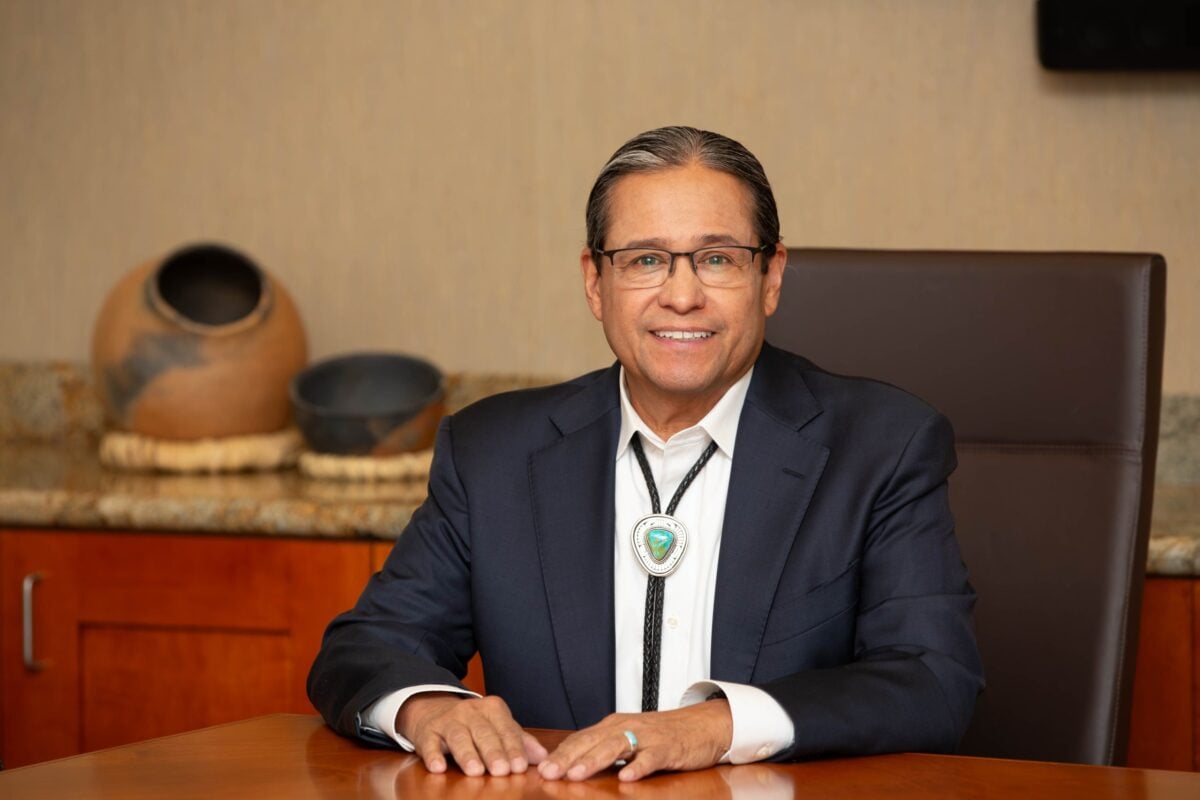
NCAI President Mark Macarro said: “While we acknowledge the effort that Chairman Selig took to convene Monday’s discussion, to be candid: a roundtable is not consultation. What Tribal Nations require, and what federal law mandates, is government-to-government consultation, not a listening session. The roundtable fell well short of that standard. Tribal Nations deserve a seat at the table when policies directly impact their sovereignty, jurisdiction, economies, and abilities to provide critical services to Tribal citizens.”
Indian Gaming Association Chairman David Z. Bean said: “The CFTC roundtable will go down as a missed opportunity for constructive dialogue with Tribal Nations. The CFTC would not explain how sports betting became legal across the country simply because a prediction market calls it an event contract. These products are gaming, and where they are being offered outside federal, state, and Tribal gaming law, they are illegal gaming. The CFTC must enforce the law as written and work directly with Tribal Nations before moving forward with policies that could undermine IGRA and Tribal-state compacts.”
Although not a participant in the roundtable, New Jersey Attorney General Jennifer Davenport issued a statement in support of Tribal leaders’ position, saying, “Prediction markets offer sports gambling without following our laws, expressly flouting the authority of States and Tribes alike. We will continue to stand shoulder to shoulder with Tribes and a bipartisan coalition of States in opposing the lawless conduct of prediction markets and protecting our residents from the threat their business model poses.”
“Today’s discussion reinforced what Tribal governments have been saying for months: prediction market companies are taking advantage of a negligent regulatory agency,” said James Siva, Chairman of the California Nations Indian Gaming Association and Vice Chairman of the Morongo Band of Mission Indians. “The CFTC is blatantly ignoring its own regulations and the clear intent of Congress. Tribal governments should not have to fight its trustee this hard to preserve the system that keeps kids in school and cops on our streets. The Commission has both the authority and the responsibility to shut these operations down, and it should do so before further damage is done.”
“The CFTC has overlooked feedback from inter-tribal leaders and organisations. Even the most rational arguments are dismissed,” said Jameson Wilson, Vice Chairman of the Oneida Nation. “This agency appears dead set on delivering a corporate gambling dystopia where teenagers can bet on anything, anytime, anywhere. Whether it’s sports, elections, or human tragedy, I fear this will not only have a devastating impact on tribal government services, but also on the future of our country,” Wilson said. “At this point, it’s really up to Congress to defend tribes and our youth from this existential threat.”
“The Poarch Band of Creek Indians and the State of Alabama prohibit online gambling and underage gambling within our jurisdictions. The CFTC’s effort to federalize these decisions directly violates Tribal and state sovereignty while disregarding the choices we have made to protect our young people,” said Robert “Robbie” McGhee, Vice Chairman of the Poarch Band of Creek Indians. “The Commission’s own proposed rule acknowledges that prediction markets are susceptible to addictive behavior, yet it dismisses those concerns by claiming prohibitions will simply push the activity offshore. More troubling, the proposal never considers the dangers of exposing 18- to 20-year-olds to sports gambling under the misleading guise of financial products.”
“USET Sovereignty Protection Fund has grave concerns that the CFTC continues to advance its rulemaking without Tribal consultation,” said Sarah E. Harris, Vice Chairwoman of the Mohegan Tribal Council. “Today, our Inter-Tribal organizations emphasized the need to suspend the rulemaking process to engage in required government-to-government consultation.”
“Tribes have built responsible, highly regulated gaming systems that support our communities and respect federal law,” said Ryan Miller, Tulalip Tribes Council Member. “By allowing prediction markets to operate unchecked, the CFTC is undermining that framework and Tribal sovereignty. Congress must act to ensure these protections cannot simply be ignored.”
“The CFTC’s intent is clear: they’re hell-bent on bringing online gaming to every mobile phone in the US – regardless of tribal sovereignty, states’ rights, and local tax revenue,” said W. Ron Allen, Chairman of the Washington Indian Gaming Association.
The leaders emphasized that prediction market platforms are not introducing a new financial product; they are offering sports wagering and casino-style gambling outside the legal framework established through the Indian Gaming Regulatory Act (IGRA), Tribal-state gaming compacts, and longstanding state gaming laws. They urged the Commission to enforce its existing authorities rather than allow federally regulated commodities markets to become a backdoor for unregulated gambling.
The roundtable comes as the Senate considers the CLARITY Act and federal courts continue to reject efforts by prediction market operators to shield sports-event contracts from state gambling enforcement. Tribal leaders urged the Commission to uphold its statutory responsibilities and have called on Congress to ensure any legislation governing commodities or digital assets explicitly closes the prediction market gambling loophole, preserves Tribal sovereignty, and reaffirms the authority of Tribal governments and states to regulate lawful gaming.