 ES
ES
 IT
IT
 PT
PT
 DE
DE
 NL
NL


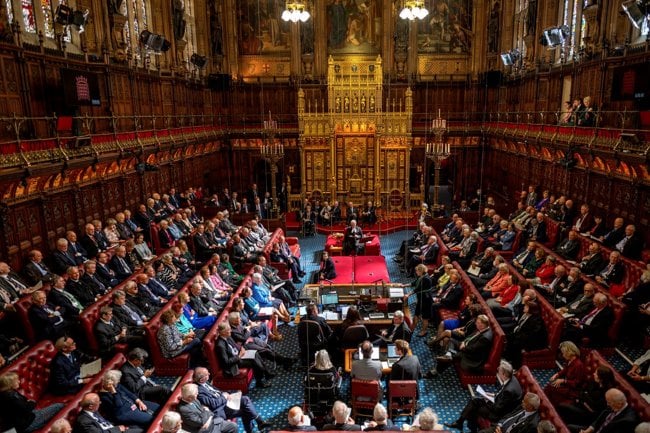
‘A comprehensive ban on gambling advertising represents the most effective policy option to advance the Government’s aim of reducing gambling harms’
A new report from the House of Lords Liaison Committee has followed up the July 2020 report of the Gambling Industry Committee which recommended a public health approach to tackling gambling advertising and related harms.
The Liaison Committee’s report argues that a comprehensive ban on gambling advertising represents the most effective policy option to advance meaningfully the Government’s aim of reducing gambling harms and represents a vital part of a public health approach.
The report of the cross-party committee has found that gambling harm remains a major public health issue. It is estimated that between 1.0 and 1.5m adults in Great Britain gamble in such a way as may be described as problem gambling. They experience a range of harms, which can include relationship breakdown; reducing spending on everyday items; drawing on savings or borrowing money to fund gambling; and lying to family members about gambling.
At its most extreme, gambling harm can extend to mental ill health and suicide. The gambling industry is particularly reliant on a small proportion of higher-spending customers and derives disproportionate profits from people in deprived areas.
Prior to the major liberalisation of gambling advertising introduced by the Gambling Act 2005, only bingo, football pools, the National Lottery, and other permitted lotteries were allowed to advertise on television and radio. Advertising was restricted on the basis that gambling should be tolerated but not stimulated. Since 2005, the volume of gambling advertising has exploded, with the industry spending over £1bn each year on advertising.
Great Britain now has a stronger evidence base than comparable international jurisdictions on the link between gambling advertising and gambling harm. Yet, despite this, several other jurisdictions have moved ahead with significant advertising restrictions to tackle gambling harm, leaving Great Britain as a comparative outlier. There are also clear indications of public concern at the volume of gambling advertising.
The Committee highlights that there is a strong case that meaningful steps to reduce gambling harms would lead to overall long-term economic benefits that would support the Government’s mission to grow the wider economy, particularly through a reduction in the economic cost of problem gambling itself and reallocation of gambling spend to other areas of the economy.
The Committee recognises that stronger action is needed to tackle unregulated gambling, but was unconvinced by claims that restrictions on advertising by licensed operators will lead to displacement of customers to the illegal market. Concerns over the illegal market must therefore not be a barrier to addressing the clear harms generated by the licensed sector.
Lord Ponsonby of Shulbrede, Senior Deputy Speaker and Chair of the House of Lords Liaison Committee, said: “Following up on the work of previous committees is a vital part of effective scrutiny and holding governments to account. Six years have elapsed since the Gambling Industry Committee published its important report on the social and economic impact of the gambling industry. The time was right to reassess this crucial policy area, focusing on the topic of gambling advertising where the former committee’s strong recommendations have been largely unaddressed and where substantial developments in the gambling advertising landscape since 2020 have demanded a re-evaluation of the policy options.”
Lord Foster of Bath, a member of the former committee and acting former Chair, said: “Up to a million and a half people in Britain experience problem gambling and the serious consequences this has on them, their families and the wider community.
“A ban on most gambling advertising would reduce gambling and therefore reduce problem gambling and the serious harm it causes. We are clear that this would shrink, rather than grow, the gambling sector and that this would make a positive difference to millions of people across the country.
“There are clear health and economic benefits to reducing participation in gambling, with a recent study by the Sheffield Centre for Health and Related Research estimating that a 10% reduction in spending on gambling could lead to an increase in GVA of £1.25bn and create over 22,000 jobs.”
The Committee’s report said: “To date, governments have been far too passive in reacting to the transformative explosion of digital advertising and to the development of new techniques such as content marketing which blurs the boundary between advertising and editorial content and appeals strongly to children.”
“Gambling harms a significant proportion of people who engage in it. The Committee noted that no form of gambling can be considered safe but that different products are associated with different levels of risk. Despite positive developments in other areas of gambling policy, notably with the 2023 White Paper and the subsequent introduction of the statutory gambling levy to fund research, prevention and treatment, gambling harm remains a major public health issue and must urgently be addressed via a public health approach to gambling advertising.”
“The Committee also makes a series of detailed recommendations about the regulation of gambling advertising, should the Government refuse to accept the recommendation for a comprehensive ban, or as part of a transition period. The Committee echoed the former Gambling Industry Committee’s recommendation in 2020 that on-course advertising for betting on horseracing and greyhound racing be exempted from a ban on gambling advertising. It also recommends that the Government assess the level of risk posed by lottery advertising in determining whether it should be subject to the proposed comprehensive ban.”