 ES
ES
 IT
IT
 PT
PT
 DE
DE
 NL
NL


For sportsbook operators, the FIFA World Cup continues to represent the single largest customer acquisition opportunity in global sport. The 2026 tournament, expanded to 48 teams and 104 matches across the United States, Canada and Mexico, will create a longer, more fragmented and operationally demanding marketing cycle than any previous edition.
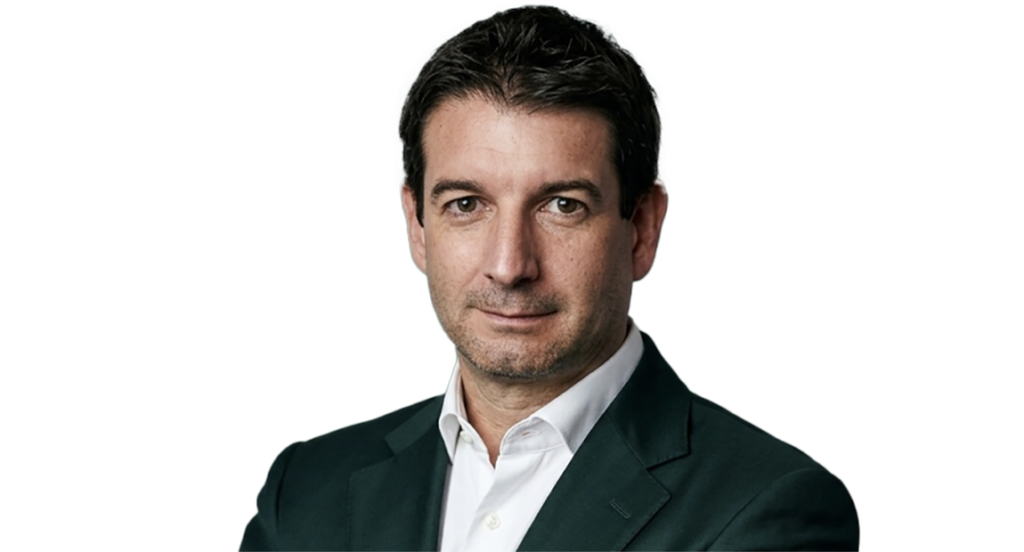
For Nikolaus Beier, SVP Marketing Services at Sportradar, the scale of the tournament presents enormous commercial potential, but also increases the cost if a campaign is poorly planned and executed: “From a sports betting perspective, the World Cup remains the industry’s biggest global opportunity in 2026,” he explains. “And whilst the scale alone changes the dynamic, operators still have time to unlock the customer acquisition potential of the largest tournament the sport has ever seen – it’s not too late.”
Yet Beier’s central message to operators is not simply to spend more aggressively. Instead, even with less than a month to kickoff, he believes the operators who generate sustainable value will be the ones that prepare effectively, balance brand and performance marketing, retain operational flexibility throughout the tournament and maintain a clear post-event retention strategy.
“The operators who succeed are typically those that treat the World Cup as part of a wider customer lifecycle strategy,” he says. “The mistake is to focus exclusively on short-term acquisition during the tournament itself, especially as it gets nearer.” The distinction between acquisition and long-term value is becoming increasingly important as customer acquisition costs continue to rise across regulated markets. Beier argues that operators often underestimate the relationship between brand awareness and performance marketing efficiency, particularly during high-noise events such as the World Cup, but still have ample time to refine this balance in their campaigns.
“Performance marketing does not operate in isolation. Consumers are significantly more likely to engage with advertising when they already recognise and trust the brand.” While Beier avoids prescribing a universal formula, he suggests operators should think in terms of a relatively balanced split between brand investment and performance activity. “As a starting point, I would generally think in terms of a 50-50 split,” he explains. “In many cases, operators may even benefit from increasing brand investment in the remaining couple of weeks before the tournament begins”.
During the World Cup, premium inventory becomes extremely expensive, particularly across television and large-scale sponsorship environments.” This creates a strategic challenge. Operators that reduce brand activity during the tournament risk losing visibility at the very moment consumer attention peaks. Equally, operators that rely exclusively on large-scale awareness campaigns risk driving inefficient acquisition costs in a highly inflated advertising market.
“The challenge during major tournaments is that every operator is competing within the same ecosystem at the same time,” says Beier. “Simply increasing spend does not necessarily translate into superior performance.” Instead, he believes the advantage increasingly lies with operators capable of executing more targeted, outcome-driven campaigns across both performance and brand awareness, supported by flexible digital infrastructure and audience intelligence.
“We now have much more sophisticated ways of identifying and reaching highly relevant audiences,” he explains. “The opportunity is not necessarily to outspend competitors, but to engage the right users at the right moment and in the right context.” This flexibility has become particularly important given the structure of the 2026 tournament. The expanded format, wider geographic spread and significant time-zone differences will fundamentally alter audience consumption patterns, especially for European and African operators.
“Media consumption behaviour will be different during this tournament,” Beier notes. “Many matches will take place outside traditional peak viewing hours in Europe, which changes how audiences engage with content, highlights, social media and betting activity.”
Rather than relying solely on live match engagement, operators may need to focus more heavily on catch-up behaviour, post-match analysis, mobile engagement and personalised content distribution. “It becomes increasingly important to understand when and how consumers are interacting with the tournament,” he says. “That may not always be during the live event itself.” This creates additional complexity around campaign planning and localisation. Operators must not only prepare for different tournament scenarios, but also retain the flexibility to adapt campaigns dynamically depending on team performance, audience sentiment and engagement trends.
“The best strategies combine clear planning with the ability to react quickly,” says Beier. “The World Cup is heavily influenced by national team performance. If a local team progresses deep into the tournament, engagement levels can increase significantly. Equally, if a team exits early, campaign efficiency may decline just as quickly.”
Operational flexibility is one reason Beier believes digital channels are becoming increasingly important during major sporting events. Traditional media buying remains valuable for awareness, but digital advertising allows operators to adjust spend, creative and targeting in real time. “Traditional channels are often expensive and relatively inflexible,” he says. “Digital environments allow operators to optimise campaigns continuously based on performance and changing market conditions.”
Central to that strategy is the growing use of real-time sports data and behavioural targeting. Sportradar’s own approach combines live sports data, fan intelligence and programmatic advertising infrastructure to create campaigns linked directly to moments within live sport. The World Cup creates an ideal environment for real-time activation, says Beier. “Campaigns can respond dynamically to changes within a game – whether that is a goal, an injury, changing odds or unexpected momentum shifts.”
It’s an approach that’s becoming increasingly sophisticated as sportsbooks expand their focus beyond traditional match betting into player-specific markets and in-play experiences. “We are seeing continued growth in player-focused betting markets,” he explains. “That creates opportunities to tailor advertising around individual player performance and live match narratives.”
Beier believes this evolution reflects broader changes in how audiences consume sport and betting content. Recreational bettors and experienced bettors often respond differently to messaging, which means operators must increasingly personalise communication strategies. “More recreational audiences tend to engage with broader tournament narratives and pre-match activity,” he says. “More experienced or higher-frequency bettors are typically more responsive to live developments and in-play opportunities.”
The challenge, however, is not simply attracting users during the tournament, but retaining them afterwards. Sportradar has previously cited a 495 per cent increase in first-time deposits during campaigns surrounding Euro 2024 and Copa América, driven by heightened public attention and targeted audience activation. Beier attributes those results to the combination of elevated sporting interest and more precise advertising execution.
“Major tournaments naturally generate significantly higher levels of public attention,” he says. “The key is combining that interest with targeted, personalised activation capable of reaching the right audience with the right message at the right time.” Yet he cautions that tournament acquisition alone does not guarantee sustainable value. Some customers will remain highly engaged after the tournament, while others may simply participate recreationally during the event itself.
“The post-tournament strategy is critical,” he explains. “Operators need to think carefully about reactivation, retention and how they continue engaging users once the World Cup has finished.” Beier describes World Cup marketing budgets as effectively creating a ‘13th month’ within the annual acquisition cycle. Operators frequently increase spending substantially during the tournament before activity declines again ahead of the return of domestic leagues later in the summer.
“What matters is whether operators successfully convert those acquisitions into longer-term engagement,” he says. “That ultimately comes down to CRM execution, customer understanding and retention strategy.” This is also where promotional strategy becomes more nuanced. While the industry continues to rely heavily on free bets, welcome offers and odds boosts during major tournaments, Beier believes operators are becoming more sophisticated in how they deploy incentives. “Promotional mechanics remain extremely important,” he says. “However, operators are increasingly focused on balancing acquisition incentives against long-term customer value.”
Overly aggressive promotional activity can also create short-term spikes in acquisition without necessarily delivering sustainable engagement. “If promotional intensity becomes too aggressive, operators risk attracting customers whose engagement is driven primarily by incentives rather than long-term loyalty,” Beier explains. At the same time, competitive pressures make it difficult for operators to scale back acquisition offers entirely. “The commercial reality is that if one operator materially increases promotional activity, competitors are often forced to respond,” he says. “The challenge is finding the right balance between competitiveness and sustainable value creation.”
Data consolidation is becoming increasingly important in solving that challenge. Beier believes the real value lies not simply in collecting customer data, but in connecting behavioural data with live sports context. “The real power comes from combining event data with audience intelligence,” he explains. “Understanding what is happening within the sporting event and connecting that to user behaviour creates far more scalable and effective marketing strategies.”
For Beier, one of the most interesting aspects of the 2026 tournament will be understanding how audience behaviour evolves within such an expanded format. Questions remain around attention span, engagement fatigue and the broader impact of tournament scale. “One of the things I will be most interested in understanding afterwards is whether the size of the tournament changes audience behaviour,” he says. “Will consumers engage consistently throughout the event, or will attention become more selective as the tournament progresses?”
He is equally interested in how operators adapt strategically during the competition itself, particularly as different regional audiences experience the tournament in different ways. “Every major tournament ultimately reveals which operators executed most effectively,” he says. “Afterwards, the key exercise is understanding why certain strategies outperformed others.”
The lesson is ultimately a familiar one: successful marketing is not built around a single tournament moment, but around preparation, adaptability and continuous optimisation. “The operators that perform best are usually those with a clear strategy, the flexibility to adjust in real time and the discipline to analyse results properly afterwards,” he concludes. “That process of continuous refinement is ultimately what drives long-term success.”