ES
 IT
 PT
 DE
 NL


A widespread ban would not be targeted at those who are most vulnerable, including young people.
The British Government has decided not to impose a blanket ban on gambling advertising, saying it was balancing concerns over how advertising can influence gambling behaviours with concerns over consumer visibility of licensed operators.
It said that gambling ads ‘would not be targeted at those who are most vulnerable, including young people.’
A government statement read: “The Government will not take forward a comprehensive ban on gambling advertising. As part of a legitimate and regulated industry, it is right that operators are able to responsibly advertise the services they offer. A widespread ban would not be targeted at those who are most vulnerable, including young people. It would likely have negative knock-on impacts for sectors supported by advertising, enjoyed by millions across the country.”
“As the independent regulator for advertising in the UK, the ASA is best placed to provide specialist regulation of, and advice and guidance to, gambling operators marketing to consumers in the UK.”
The Gambling Commission said: “The Commission is grateful for the House of Lords Liaison Committee’s interest in this area, and for their follow up inquiry. We remain confident that the current system works well and wholesale changes to that system are both unnecessary and would result in an undue regulatory burden and the overall remit of the Gambling Commission to be substantially shifted.”
“It is important that the changes made in the 2023 Gambling Review White Paper are properly evaluated. The Commission’s focus remains on making gambling safer, fairer and crime-free, and we remain committed to updating Committee members on this topic.”
UK trade body, Betting and Gaming Council (BGC), said: “We welcome the Government’s sensible and proportionate decision not to pursue a comprehensive ban on gambling advertising, and its recognition that legitimate, regulated operators should be able to responsibly advertise the services they offer.
“Ministers are also right to recognise that a blanket ban would not be targeted at those most vulnerable to harm and could have serious knock-on consequences for sports, including football and horseracing, which benefit from the significant financial contribution made by regulated betting operators.
“Crucially, the Government has acknowledged that sweeping restrictions could actually increase harm and make it harder for consumers to distinguish licensed businesses from illegal operators. The growing black market ignores advertising rules, offers none of the protections available in the regulated sector and contributes nothing to British sport or the public finances.
“BGC members are committed to the highest standards of safer gambling and already operate under strict advertising rules, alongside additional voluntary measures. We will continue working with Government and regulators to strengthen consumer protections, tackle illegal operators and ensure future decisions are proportionate and firmly based on evidence.”
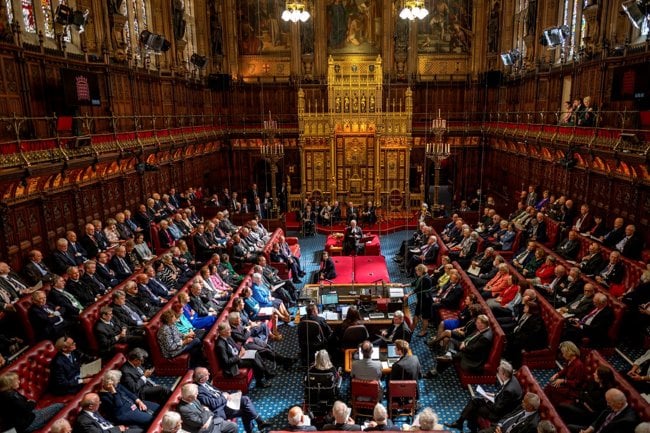
The government was reacting to a House of Lords Liaison Committee’s report that argued that a comprehensive ban on gambling advertising represents the most effective policy option to advance meaningfully the Government’s aim of reducing gambling harms and represents a vital part of a public health approach.
The report stated: “The report of the cross-party committee has found that gambling harm remains a major public health issue. It is estimated that between 1.0 and 1.5 million adults in Great Britain gamble in such a way as may be described as problem gambling. They experience a range of harms, which can include relationship breakdown; reducing spending on everyday items; drawing on savings or borrowing money to fund gambling; and lying to family members about gambling.
“At its most extreme, gambling harm can extend to mental ill health and suicide. The gambling industry is particularly reliant on a small proportion of higher-spending customers and derives disproportionate profits from people in deprived areas.”
“Prior to the major liberalisation of gambling advertising introduced by the Gambling Act 2005, only bingo, football pools, the National Lottery, and other permitted lotteries were allowed to advertise on television and radio. Advertising was restricted on the basis that gambling should be tolerated but not stimulated. Since 2005, the volume of gambling advertising has exploded, with the industry spending over £1 billion each year on advertising.”