 ES
ES
 IT
IT
 PT
PT
 DE
DE
 NL
NL


‘Carded play is giving us much better visibility into who our customers are and how they engage with us’
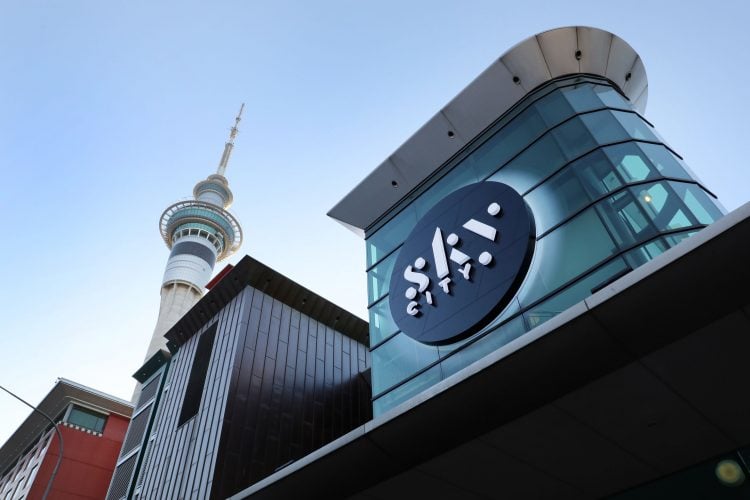
New Zealand casino operator SkyCity Entertainment highlighted the effects that introducing mandatory carded play has had on its New Zealand gaming floors as it reported a 2.4 per cent fall in group-wide revenue to NZ$411.7m (US$246m) in its half-year results. But for its CEO, Jason Walbridge, the advantages of carded play are many.
SkyCity reported a 9.2 per cent decline in gaming revenue at its SkyCity Auckland casino to NZ$164.6m, offset by an 8.5 per cent increase in non-gaming revenue to NZ$83.5m. Its casinos in Hamilton and Queenstown fell by 2.8 per cent to NZ$31.9m. In Australia, SkyCity Adelaide also fell this time by four per cent decline to AU$73.7m.
Jason Walbridge, Chief Executive Officer of SkyCity City Entertainment, said: “The first half of FY26 reflected a planned period of operational transition, with the Group focused on the second half of the year and ongoing work to support long-term operating objectives. We are undertaking a disciplined review of our operating model to ensure our cost structures reflect the current environment, while maintaining our commitment to compliance and customer experience.”
“Visitation remained steady across the Group, with the small reduction due in part to changes in the way we measure visitation and the introduction of Carder Play. Revenue was down 2.4 per cent or $12.3m, with total gaming revenue down 6.3 per cent or $19m, with lower revenue across both gaming machines and tables. The lower gaming revenue was predominantly due to the introduction of card play across our New Zealand casinos that went live in July 2025, and pleasingly, is in line with our expectations and guidance. We also experienced a lower level of activity in premium play compared to the prior period. “
He also cited the impact of increased costs related to stricter AML requirements for a decline in its financial performance in the six months to 31 December 2025.
Walbridge added: “The increase in costs included increased investment across our AML and host responsibility areas, particularly in Adelaide, as I just mentioned, as well as costs associated with the opening of the NZICC and technology costs, some one-off legal fees, and higher costs of sale associated with the growth in non-gaming revenue.”
“The results reflect the expected first-half earnings profile and the operational changes introduced during the period. Gaming revenue was affected by carded play in New Zealand, lower premium table volumes in Auckland and Adelaide, and VIP customer churn, partially offset by contributions from non-gaming businesses, including Food & Beverage and Hotels. There were some operational benefits from the additional customer data and visibility it provides. We have maintained strong customer satisfaction through implementation and the deeper insights are supporting our longer-term omni-channel strategy.”
“We’ve continued to see a change in our customer mix, as previously un-carded players have signed up for cards. And importantly, carded play is giving us much better visibility into who our customers are and how they engage with us. Pleasingly, we’re still seeing a steady sign-up of new customers, with around 4,000 per week during December. We’re also seeing strong take-up of the show royalty program, with a high proportion of card players now participating in that program. As an example of the benefit of card play in our Queenstown casino, which is a very popular tourism destination, and previously had a much lower level of card of play to our other properties, we now have much better visibility into the mix of domestic and international visitors, which allows us to be more targeted in our marketing. The increased level of host responsibility and AML requirements has seen an impact on the level of play from some of our VIP players. We are now looking to further refine the way we interact with our customers to ensure we meet our regulatory requirements and minimise the impact on the customer experience. Our loyalty programs include tiers, as with many loyalty programs. And we’re looking to be more specific in how we manage the customer value proposition across those tiers, ensuring our customers understand what is available for them.”
The company is hoping to see improved visitation following the opening of the SkyCity NZICC, New Zealand’s largest convention center. It will allow SkyCity to attract major international conferences previously unavailable to New Zealand, as well as being able to host numerous events, theater, and musical performances.
Walbridge explained: “The level of bookings we have confirmed for the remainder of financial year 2026 is very positive, with over 110,000 visitations, with still more to potentially come. This gives us confidence in delivering an increase in revenue and earnings across the Orkham precinct in the second-half of the year, particularly our hotels, food and beverage, Skytower, and car parking operations. Looking into financial year 2027, the combination of events confirmed and in the sales pipeline, with visitation growing significantly, it’s a very pleasing outcome and shows that we have a facility that is attractive to both domestic and international customers. There’s certainly going to be a steep learning curve in the early stages, but the teams are well-prepared for this.”