 ES
ES
 IT
IT
 PT
PT
 DE
DE
 NL
NL



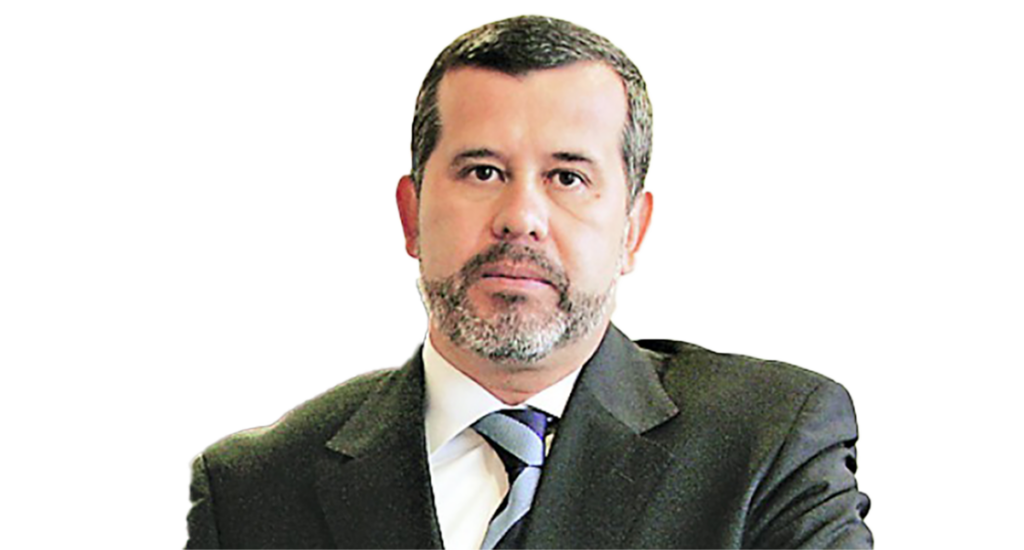
In a recently published opinion piece, Luis Alberto Gama – former director of Uruguay’s Dirección Nacional de Loterías y Quinielas and now managing partner at Gaming Consultores, the regional advisory firm he co-founded with fellow former regulators from Peru and Paraguay – makes the case that illegal gambling’s biggest problem isn’t its scale, but how little attention it commands relative to that scale.
Gama’s central argument is that illegal gambling has continued expanding largely outside public debate, overshadowed by more visible concerns like insecurity, inflation and poverty, even as it evades state oversight and generates real social harm. He’s careful to frame it as more than a regulatory technicality or unfair competition for licensed operators. In his description, it functions as a genuine clandestine economy – untaxed, uncontrolled, and thriving specifically wherever state presence is weak or inconsistent.
What concerns him most isn’t the growth itself but the absence of visibility around it, as few political leaders treat it as a serious agenda item, few civil-society organisations flag its consequences, media coverage remains limited, and coordination between the agencies responsible for preventing, investigating and sanctioning it is often insufficient. That silence, he argues, carries a real cost that can be measured in fraud exposure, unrestricted access for minors, families affected by problem gambling, and public resources that never materialise because the activity generates no tax revenue.
Technology has raised the stakes
Gama points to a paradox: as illegal gambling operations have grown more sophisticated – particularly online, where operating across multiple jurisdictions at once makes enforcement genuinely harder – the public conversation about them has, if anything, gone quieter rather than louder. His argument is that this complexity can’t become a justification for inaction. Tackling the problem seriously, in his view, requires sustained public policy rather than isolated raids. This translates to coordination across levels of government, international cooperation, updated technological tools, modernised legal frameworks, and ongoing public-awareness efforts – all of it underpinned, he stresses, by genuine political will.
A call to four different audiences
Rather than closing with a simple warning, Gama frames the piece explicitly as a challenge directed at four groups. To lawmakers, he calls for clear, precise, updated legal frameworks that give courts real tools to investigate and prosecute new forms of illegal gambling and the organisations behind them, without ambiguity or grey areas that blunt enforcement. To governments, he calls for treating illegal gambling as part of a broader phenomenon requiring coordinated policy and adequately resourced institutions, rather than piecemeal responses. To media, he asks for sustained coverage of a reality he feels has stayed in the shadows too long. And to society at large, he warns that as long as illegal gambling is seen as harmless or someone else’s problem, the collective silence around it will keep giving it room to grow.
Gama closes by tying the issue to something larger than gambling policy specifically: in his framing, wherever the state loses ground, something else fills that space, and once illegality becomes normalised, what’s really at risk is institutional quality, protection for vulnerable groups, and public trust in the rule of law more broadly. His conclusion is less about diagnosing the problem than about naming it as an institutional and social priority – arguing that the real challenge societies face isn’t discovering that illegal gambling exists, but continuing to act as though it doesn’t.