 ES
ES
 IT
IT
 PT
PT
 DE
DE
 NL
NL


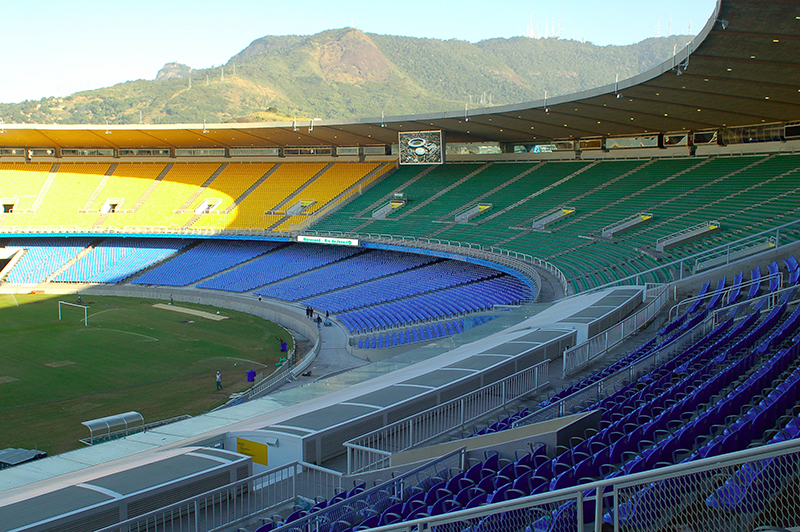
A new benchmark, the Índice Brasileiro de Sustentabilidade no Futebol (IBSF), is being developed to assess how Série A and Série B clubs in Brazil’s national championship handle environmental, social and governance practices – with their commercial relationships with sports betting operators built directly into the evaluation.
Behind the initiative
The index is a project of the Movimento Sustentabilidade em Campo (MSeC), backed by the Confederação Brasileira de Futebol (CBF), with results from all 40 clubs across the two divisions expected in early 2027. MSeC is led by Marcelo Linguitte, a business strategy and sustainability specialist with more than 35 years of experience who previously directed the UN Global Compact’s Brazil office – a background that positions the initiative as an extension of established ESG methodology rather than a sport-specific improvisation. Alongside co-founders Cleila Teodoro, a governance, finance and sustainable communications specialist, and Pedro Pugliese, founder of Grupo Up and Inova BR with nearly two decades in sports entertainment and innovation, Linguitte has built MSeC into a recognised voice on the intersection of Brazilian football and sustainability over the past year, including a benefit auction that raised funds specifically to develop the IBSF and a forum held at São Paulo’s Museu do Futebol during last year’s São Paulo Climate Week.
Linguitte has argued that Brazilian football’s rapid evolution into something closer to a corporate industry has outpaced its governance and transparency practices, describing a sector that generated substantial revenue for years without much pressure to modernise, making it comparatively slow to respond to society’s growing demand for accountability.
Betting sponsorships get their own line of inquiry
Clubs will face 86 questions across three pillars – environmental, social and governance – with documentation required to substantiate their answers rather than self-reported claims alone. Within the governance pillar specifically, the index will examine clubs’ relationships with betting operators: how much sponsorship revenue those partnerships represent as a share of club budgets, and whether clubs have internal processes in place to identify and address potential irregularities connected to betting activity.
Linguitte was direct about why this matters as a governance question rather than a moral one: betting sponsorships are now a fact of how Brazilian football is financed, and pretending otherwise isn’t realistic – but that reality makes oversight and structured tracking more necessary, not less, precisely because the relationship between clubs and operators has scaled so quickly. Framed this way, the IBSF’s betting-related questions read less as scrutiny of the sponsorships themselves and more as a push for the kind of contract transparency and internal compliance processes that make those partnerships sustainable long-term – a governance maturity question increasingly relevant given how central betting sponsorship has become to Série A and Série B club finances since Brazil’s regulated market opened.
What the index measures, and what comes next
Beyond betting, the environmental pillar will track waste management, energy efficiency, greenhouse gas emissions and fan-facing environmental education, while the social pillar covers diversity, inclusion and community-facing projects. Governance more broadly will assess contract transparency, women’s representation on boards, ethics codes and anti-corruption measures. Results will be audited and shared with clubs before public release, with MSeC planning to repeat the assessment annually to track progress over time.
Linguitte expects the social pillar to score strongest in the first diagnostic, given the volume of existing anti-racism and community initiatives already run by clubs and players, while governance, transparency and environmental impact are likely to show the most room for growth – positioning the IBSF less as a report card and more as a structured push toward the kind of institutional maturity, including around betting partnerships, that Brazilian football’s commercial growth has arguably outrun.