ES
 IT
 PT
 DE
 NL


Stuart, the first ICE in Barcelona was inevitably about proving the move from London could work, while the second was about building on those foundations. What does the third edition need to achieve?
Stuart Hunter: I think the first year proved that the industry was fully committed to the move. Every part of the ecosystem – exhibitors, attendees, suppliers, contractors and ourselves as organisers – approached Barcelona with a sense of discovery, but everyone invested in making it work. The second year was about refining the experience and applying what we had learned. By the end of that edition, there was a feeling that ICE had really found its stride in Barcelona.
The roots are now firmly established, so the question becomes how we use the platform we have created to anticipate what comes next for the industry. Our creative direction for 2027, “Welcome to the Playvolution”, reflects that. It is about how gaming is evolving and how ICE can help drive and support that evolution.
ICE and iGB Affiliate occupied considerably more space in 2026 than during the first Barcelona edition. At what point does growth become less about making the event bigger and more about improving the experience?
Margaret Dunn: This year our focus is very much on quality rather than quantity. We are not simply trying to attract the largest possible number of visitors. We are concentrating on the markets, communities and decision-makers that our exhibitors want to meet. This means taking a more community-led approach and looking closely at where the industry’s growth is coming from and which audiences are most relevant.
Hall 7 is an example of that. It is carefully curated and brings together established technology businesses, emerging companies and innovative gaming suppliers. But if we expand the product mix, we also have to expand the relevant audience. That means attracting people such as CTOs, CIOs, IT directors, CFOs and data officers who may previously have been underrepresented at ICE.
Stuart: The phases of growth have also been different. The first year in Barcelona gave existing businesses the opportunity to expand after many had been constrained by the space available in London. The second opened the event to more new businesses. Now we are looking at converging sectors that can add value to the gaming ecosystem. It isn’t a question of simply taking more space because it is available.
Is there ultimately an optimum size for ICE, or do you envisage the physical exhibition continuing to expand?
Stuart: Growth has to be aligned with what the industry requires. We moved to Barcelona because the industry wanted that change, and the event has grown significantly because businesses wanted more space to present products and because new companies wanted to enter the market. The next opportunity is to consider sectors that complement the existing ICE proposition. Technology is the first example, and hospitality technology could potentially be another in the future.
But we would never want to open another hall simply because we could fill it. That risks diluting the effectiveness of the show. If expansion brings new products, new ideas and genuine buyers who add value to the ecosystem, then it makes sense. Growth for its own sake does not.
As ICE expands across gaming, betting, lottery, payments, technology and regulation, how do you prevent those communities becoming separate events that simply happen to occupy the same venue?
Stuart: ICE remains one community. We have worked hard to segment the show so that people can navigate such a large exhibition effectively, but that does not mean creating isolated events. World Gaming Week is important in that respect because it brings those communities together. We have networking opportunities and experiences that span the entire ecosystem, while also recognising that individual sectors and regions need dedicated environments where people can meet their own communities.
Margaret: Personalisation is important. We can create specific journeys and experiences for different groups without losing the sense that everyone is part of the wider ICE community. Canada House is one example for 2027, and we also have dedicated content and activity for markets including Africa.
The objective is to make those communities feel properly represented while retaining the connections between them.
You increasingly talk about World Gaming Week rather than ICE simply being a three-day exhibition. Is the longer-term ambition to make Barcelona somewhere the industry effectively relocates to for a week every January?
Margaret: World Gaming Week is about the wider experience surrounding ICE, but we have listened carefully to feedback about the length of the exhibition itself. For 2027, ICE remains a three-day show. Rather than adding another exhibition day, we are concentrating on helping people use those three days more effectively. There are also experiences that extend what people can do while they are in Barcelona.
For example, our partnership with Matchroom will bring a live pool tournament to ICE, and we are working with Behind the Gloves on the charity boxing event. It is about making World Gaming Week memorable without losing sight of the fact that people primarily come to ICE to do business.
Time management is arguably one of the biggest challenges at an event of ICE’s scale. How are you addressing that?
Margaret: One of the most consistent requests we receive is for more places to conduct meetings. People can end up leaving the venue and going to hotels or other locations simply because they cannot find suitable space. Which is why we are introducing Meet Me. There will be three dedicated meeting districts across the show, providing approximately 2,000 square metres of meeting space. Pass holders will receive additional benefits including fast-track access and entry to Hall 7 from 9.30am, allowing meetings to begin before the main exhibition opens.
Stuart: The other important element is technology. Events are fundamentally about connections – some happen organically, some are carefully planned and others can be facilitated by the organiser. Meet Me allows us to introduce genuine AI-driven matchmaking. Attendees can be much more specific about who they want to meet and what they want to achieve, and the technology can help identify relevant connections. We are investing more than €1m in Meet Me, so it is a significant project for us. The objective is straightforward: to improve the effectiveness of the time people spend at ICE.
The World Gaming Council is another major change for 2027. What was missing from the traditional conference model?
Margaret: The conference content at ICE has always been strong and provides significant value in identifying emerging trends and growth opportunities. However, the feedback we received was that people also wanted more opportunity for genuine debate and discussion. People arrive at ICE with specific challenges and they want solutions. Listening to a presentation does not always provide those answers.
The World Gaming Council creates a more interactive, outcome-driven environment where people can have deeper discussions, including closed-door conversations where appropriate. It will bring regulators, operators and other stakeholders together around some of the industry’s biggest challenges, including the illegal market, reducing financial crime and safer gambling. We want people to leave those discussions with tangible ideas and potential solutions they can take back to their organisations.
You have been very public about acting on feedback from the first two Barcelona editions. What will visitors notice has changed as a direct result?
Margaret: Catering was one area where we received feedback, particularly because the weather made some of the outdoor facilities more difficult to access last year. We are introducing an additional catering facility that will make that easier. Access and congestion have also been important. We have done a considerable amount of work around directing people to the appropriate entrances and improving the way visitors move into and around the venue. Meet Me will introduce fast-track access for pass holders, while we are also being much clearer about which entrances should be used for ICE and iGB Affiliate.
Stuart: There are many improvements that may not necessarily make headlines but are extremely important to the experience. We analyse navigation and visitor movement, including heat mapping, to understand how different areas of the show perform. We effectively deconstruct those elements every year and ask how they can be improved. We never simply assume that because something worked previously it should remain unchanged.
With more than 65,000 people expected across World Gaming Week, what measures of success matter beyond the headline attendance figure?
Margaret: There are many. Criticality is extremely important – whether visitors and exhibitors consider ICE an essential, non-negotiable event in their calendar. We measure Net Promoter Score, overall satisfaction, intention to return, exhibitor rebooking and churn. We also look very closely at the composition of the audience. If we have identified operators or regulators as priority audiences, or particular geographic markets such as Africa or Latin America, we measure how effectively we have grown participation from those groups.
Approximately 86 per cent of exhibitors rebooked very quickly following the previous show, many during ICE itself. That is an important indication of the value they see in attending. So while overall attendance matters, the quality and relevance of that audience are equally important.
Does that also explain why you are putting greater emphasis on particular geographic communities?
Margaret: Yes. We are identifying the markets where our customers see opportunity and ensuring the right operators, regulators and decision-makers from those jurisdictions are represented. Africa is an important focus and we are increasing our efforts to attract operators from the region. We are also developing initiatives for other communities, including Canada, where Canada House will provide a dedicated executive environment. The important thing is that these are not isolated initiatives. They form part of the wider ICE ecosystem and help us create more relevant experiences for different sections of the audience.
World Gaming is a broader identity than Clarion Gaming. What does that change represent beyond a new name?
Margaret: It reflects how we see our role within the industry. We bring together all parts of the gaming ecosystem and, as one of the world’s leading event organisers in this sector, we recognise that gives us a degree of influence. We want to use that influence positively and play an active role in helping to shape the industry. This includes initiatives such as the Sustainable Gambling Zone and our support for the ICE Research Institute, which produces research around safer gaming. It also extends to the technology transformation we are seeing across the industry.
World Gaming represents a broader view of our responsibility and the role we can play throughout the sector.
After two successful Barcelona editions, how do you prevent ICE from becoming a victim of its own success and continue finding meaningful improvements?
Stuart: There are always opportunities to improve. Some are major projects and others involve very detailed elements of the visitor experience. We analyse navigation, visitor movement, individual areas of the show and the effectiveness of new initiatives. We also look outside gaming. We attend leading events in other industries to understand how they are using technology and creating better experiences.
We are a business-first organiser. We are not trying to turn ICE into something dominated by parties and peripheral activity. The fundamental purpose is to create business opportunities. At the same time, attending a trade show should be exciting. At the end of World Gaming Week, we want people to ask themselves whether they used their time effectively, strengthened existing business relationships, created new ones and had a memorable personal experience. If we can bring all of those elements together, then World Gaming Week has been successful.
So what does continued evolution look like when ICE is already operating at this scale?
Stuart: It comes down to constantly examining the component parts rather than assuming the event is finished because it is successful. We will assess how Hall 7 performs, how Meet Me works across the exhibition and how effectively we are serving both the buyer and supplier sides of the industry. We will continue looking at navigation, audience composition and the areas where customers tell us ICE is critical to their businesses.
The scale gives us opportunities, but it also creates a responsibility to ensure every addition has a purpose. The objective is not to make ICE bigger, but more effective.
Sculpting the Future of ICE
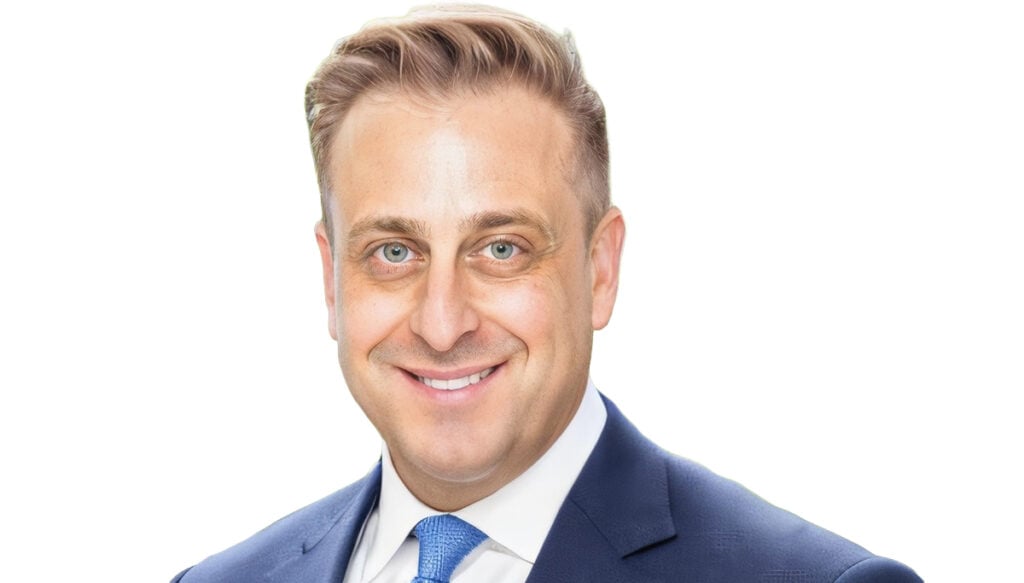
With ICE preparing for its third edition in Barcelona, G3 speaks to World Gaming Managing Director Stuart Hunter and Executive Director Margaret Dunn about moving beyond the relocation phase, prioritising quality over scale, making three days more productive and using World Gaming Week to bring the industry's different communities together.