 ES
ES
 IT
IT
 PT
PT
 DE
DE
 NL
NL



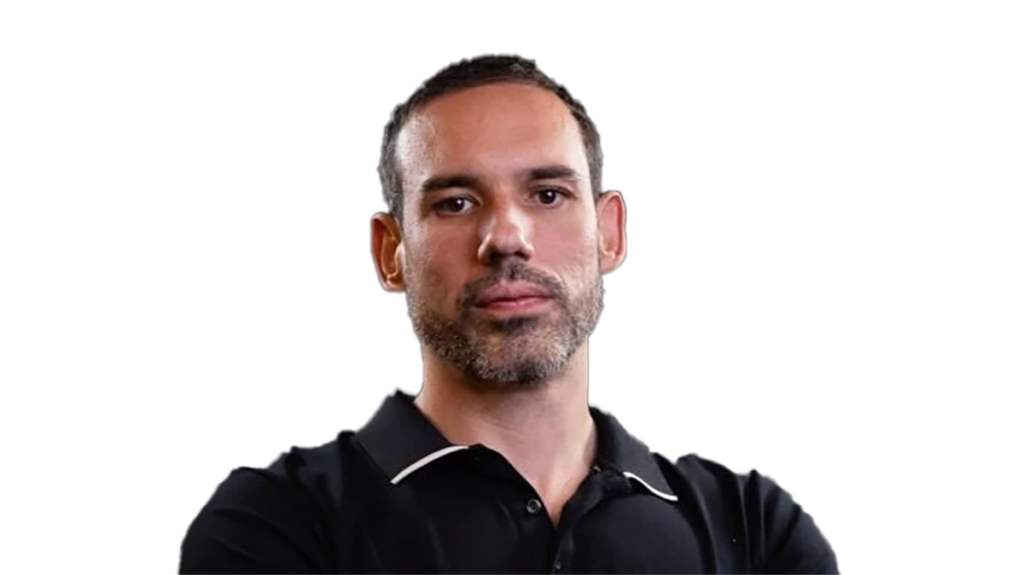
How to balance innovation, legal certainty and consumer protection in a market moving at the speed of technology was one of the central questions Fabíola Esteves, president of LOTERJ, Rio de Janeiro’s state lottery and betting regulator, addressed during a panel at Rio Innovation Week, one of Latin America’s largest technology and innovation events.
From inside the regulator to leading it
Esteves’s path to the top of LOTERJ ran entirely through the institution itself. She joined with prior experience at ApexBrasil, Brazil’s trade and investment promotion agency, as well as the Ministério do Turismo and Ministério da Saúde, before taking on internal roles at LOTERJ tied to operations and the regulator’s build-out of Rio de Janeiro’s sports betting framework – work that eventually led to her appointment as vice-president under then-president Hazenclever Lopes Cançado.
When Cançado stepped down in March 2026, weeks ahead of the electoral disqualification deadline for officials planning to run for office, Governor Cláudio Castro named Esteves his successor, elevating her from within rather than bringing in an outside appointment. She has credited Cançado’s tenure – during which LOTERJ became the first regulator in the country to implement a functioning betting framework — with positioning Rio de Janeiro at the forefront of Brazil’s regulated market, a legacy she’s now tasked with building on.
The regulator’s role, as she frames it
At the Rio Innovation Week panel, Esteves argued that a regulator’s core job is creating an environment of trust that enables economic development without sacrificing public-interest protections – and that modern regulation has to evolve at the same pace as the market itself, delivering legal certainty for operators, transparency in consumer relationships, and effective safeguards for bettors simultaneously rather than treating those as competing priorities.
She also pointed to a dimension of the regulator’s impact that extends beyond the betting market itself: revenue LOTERJ collects from lottery activity is channelled back into social projects targeting Rio de Janeiro’s most vulnerable populations, reinforcing initiatives tied to inclusion, citizenship and quality of life across the state – framing regulatory oversight as directly tied to social investment rather than purely a compliance function.
The 2027 Women’s World Cup as a test case
On the responsibilities of sports entities and other actors across the betting value chain, Esteves pointed to Brazil hosting the 2027 FIFA Women’s World Cup as a concrete opportunity: a moment to consolidate a culture of integrity, promote responsible communication around betting, and raise the profile of women’s football, leaving what she described as a positive legacy for both the sport and Brazilian society more broadly.
Part of a broader conversation on sports communication and regulation
Esteves shared the stage with Amanda Bonfim, CEO of BR&CO, who joined a related panel focused on the legal and institutional challenges facing sports communication in the digital era, and on building a regulatory environment compatible with emerging technologies – a pairing that placed LOTERJ’s regulatory perspective alongside the commercial and communications side of the industry navigating the same rules.